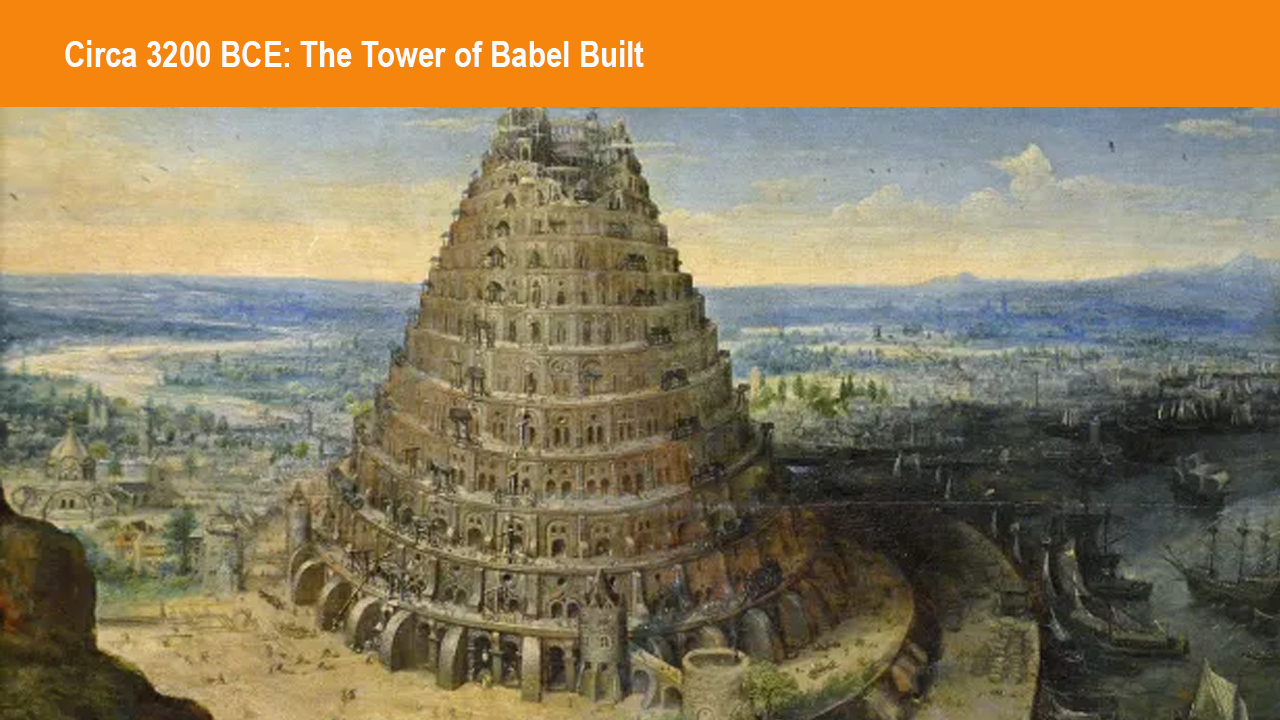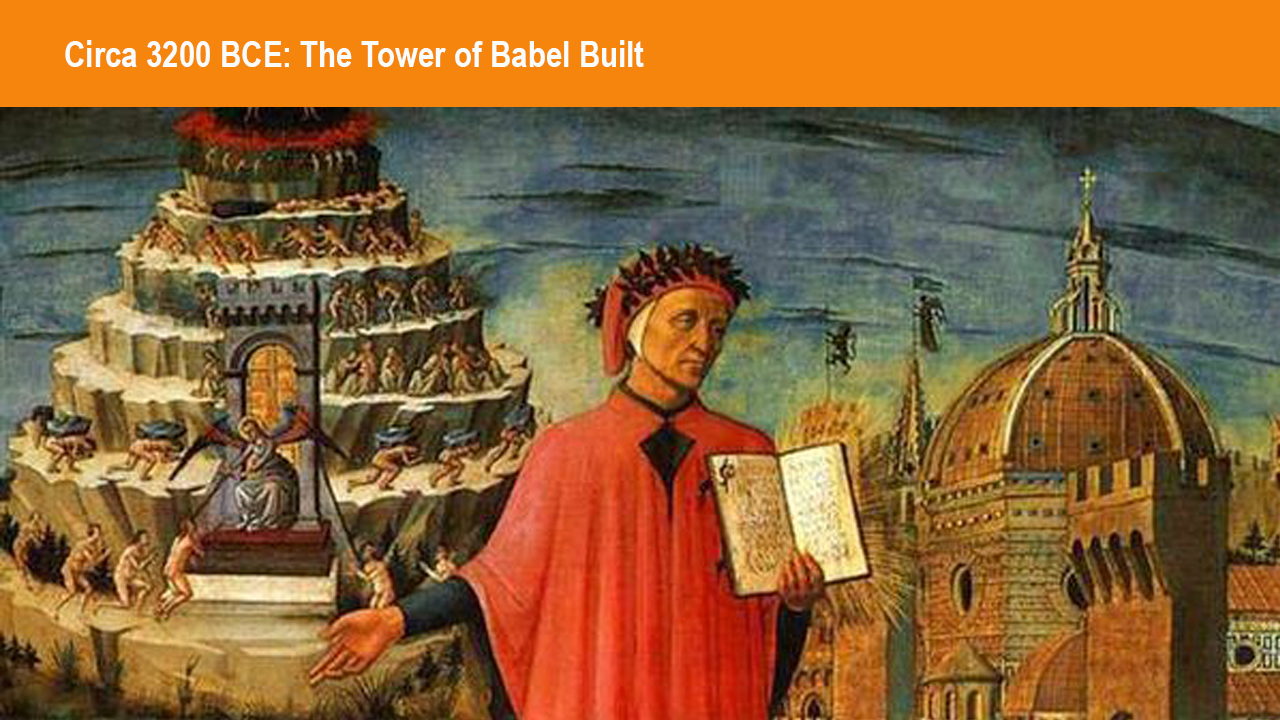
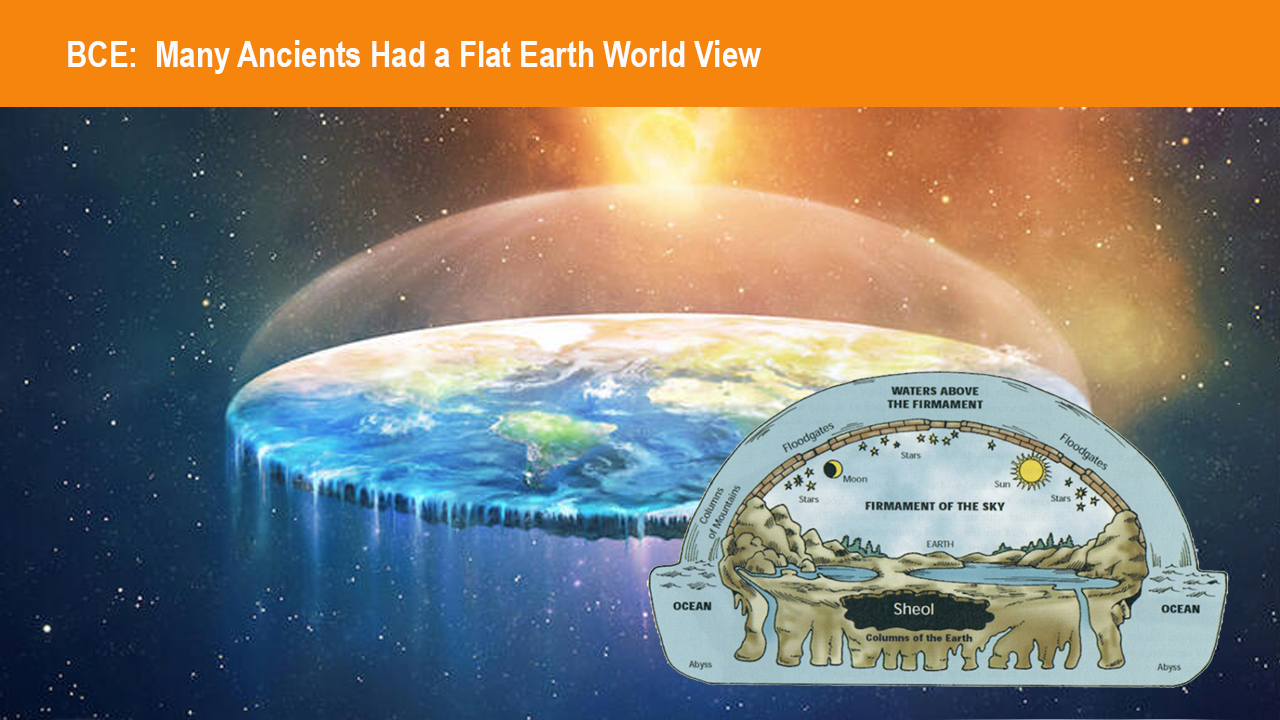
 Most ancients had a flat earth world view. Heaven was just beyond the clouds and Noah’s great flood was created when God unleashed the firmament waters from above.
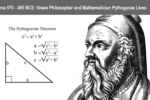
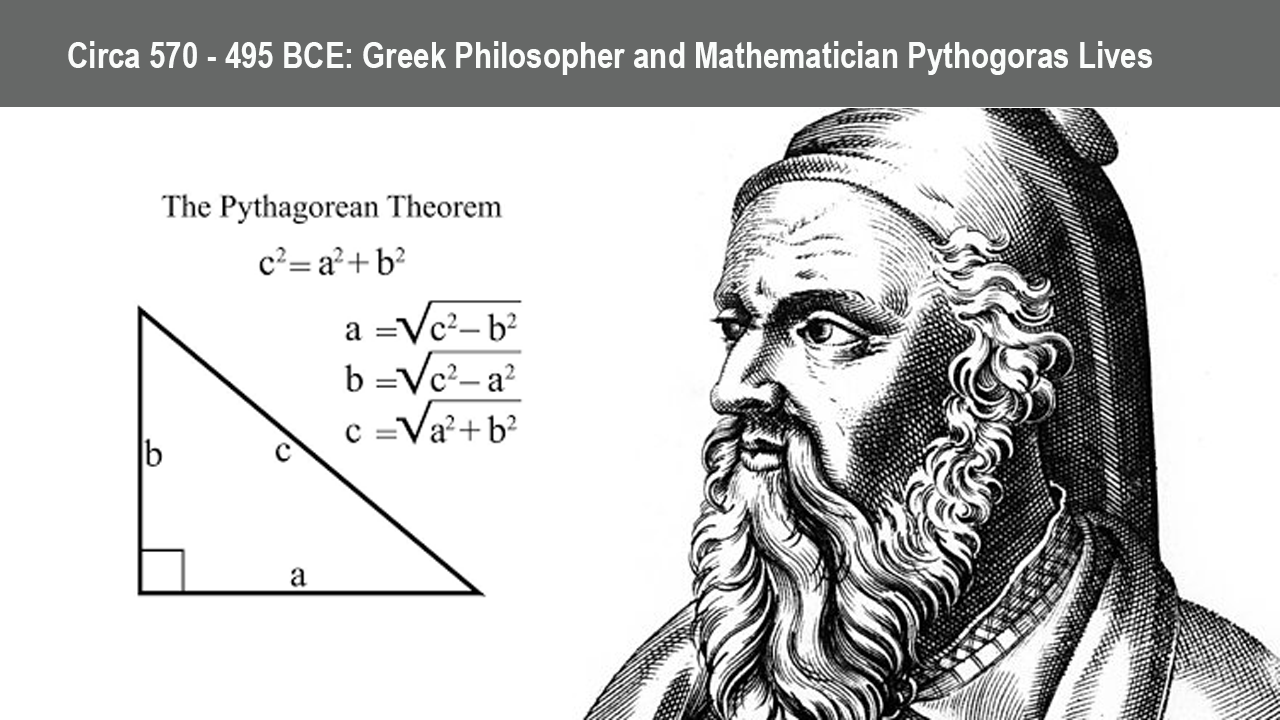 Pythagoras of Samos was an ancient Greek philosopher and most well known for the Pythagorean theorem. His political and religious teachings influenced the philosophies of Plato, Aristotle, and Western philosophy. He believed in a "transmigration of souls", which holds that every soul is immortal and, upon death, enters into a new body.
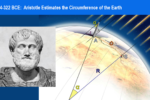
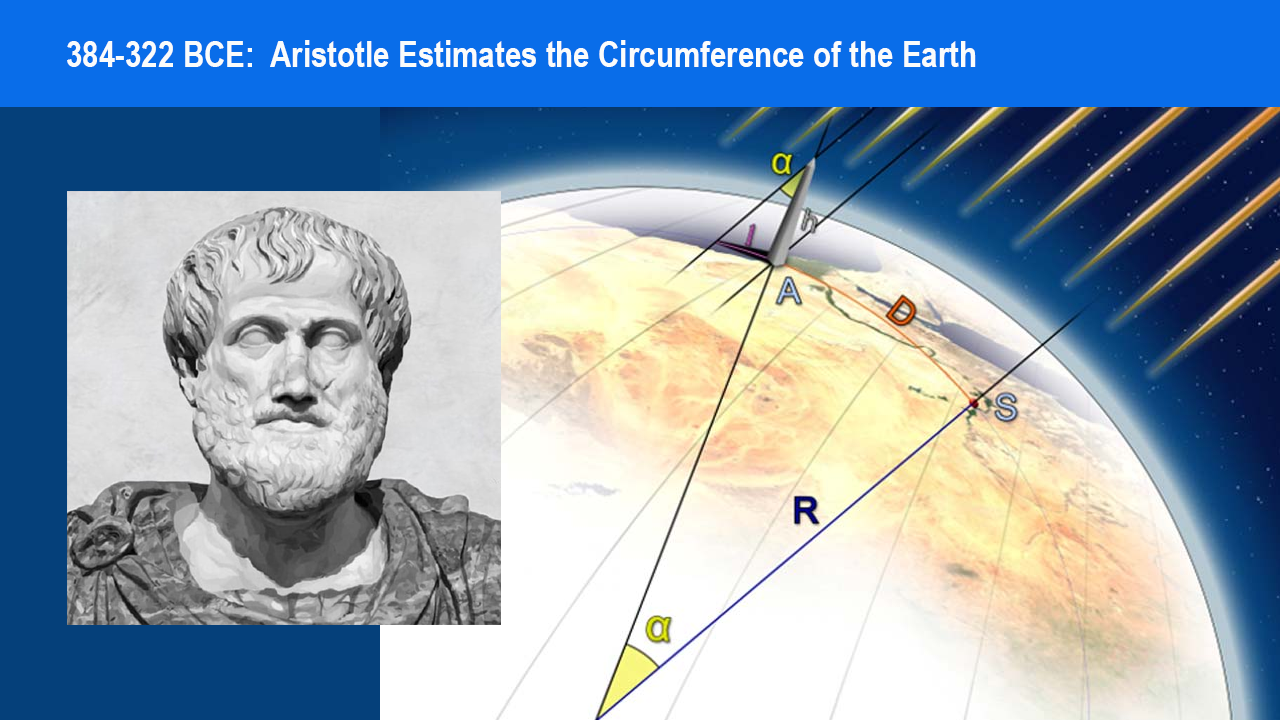 Ancient Greek thinker Aristotle is credited with advances in a number disciplines. Not only did he realize that the earth was a sphere but was the first known person to try and calculate its size and circumference. Later, in 274 BCE, Eratosthenes more accurately calculated circumference and even axial tilt.
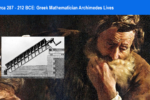
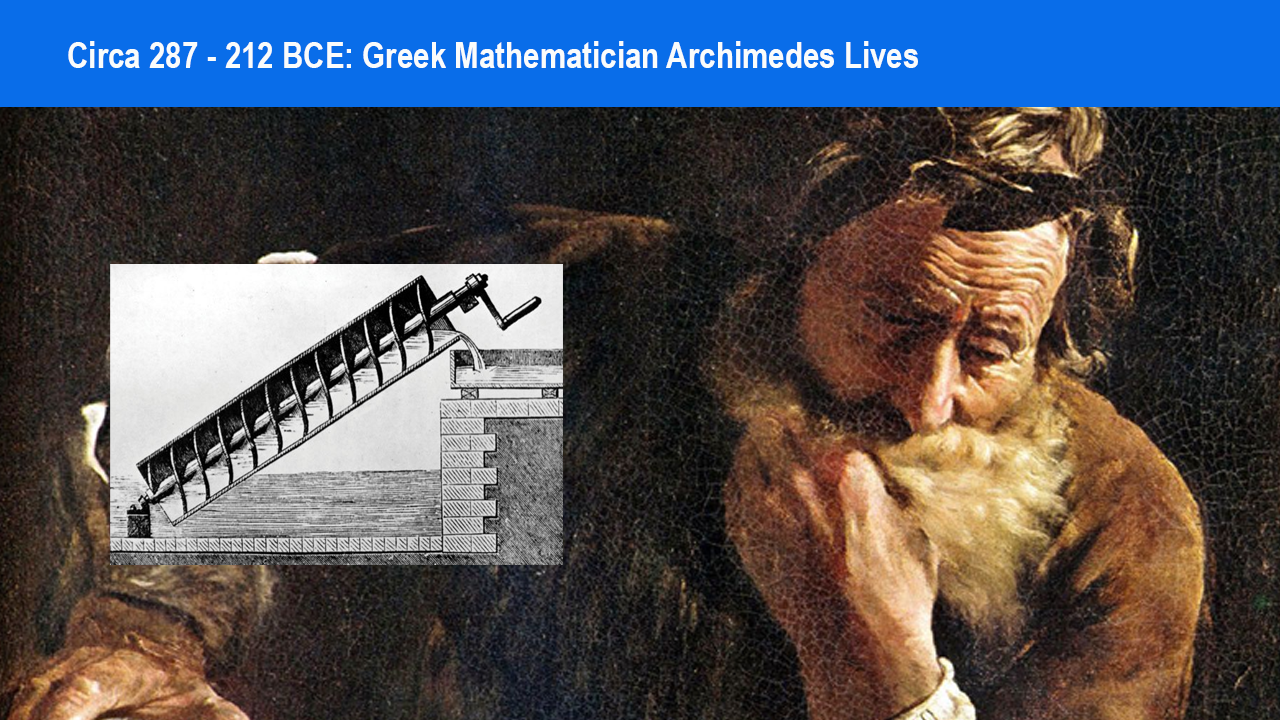 Archimedes of Syracuse lived between 287 and 212 BCE and is considered to be the greatest mathematician of ancient history. He anticipated modern calculus and invented the Archimedes Screw which is still used in crop irrigation
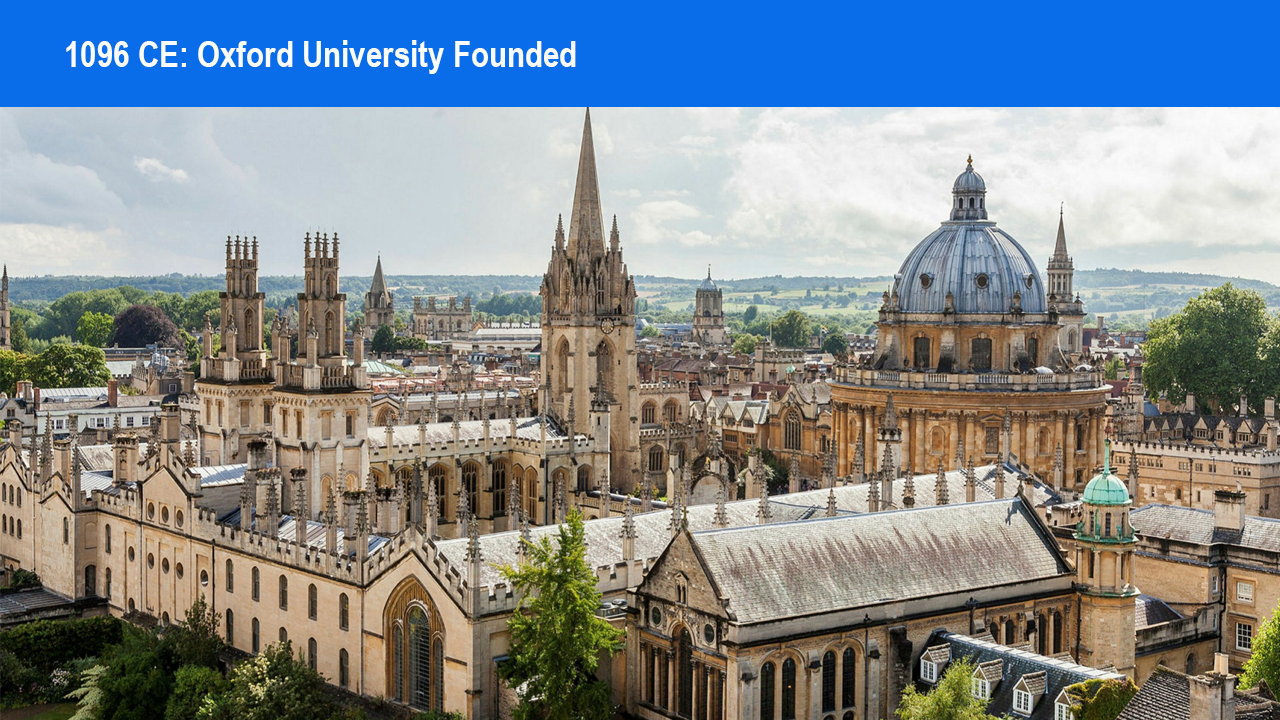 In 1096 Oxford University was founded in England. Cambridge would follow in 1209. These centers of learning and inquiry… and others like them would be where theologians, scientists and political leaders would receive their educations.
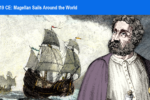
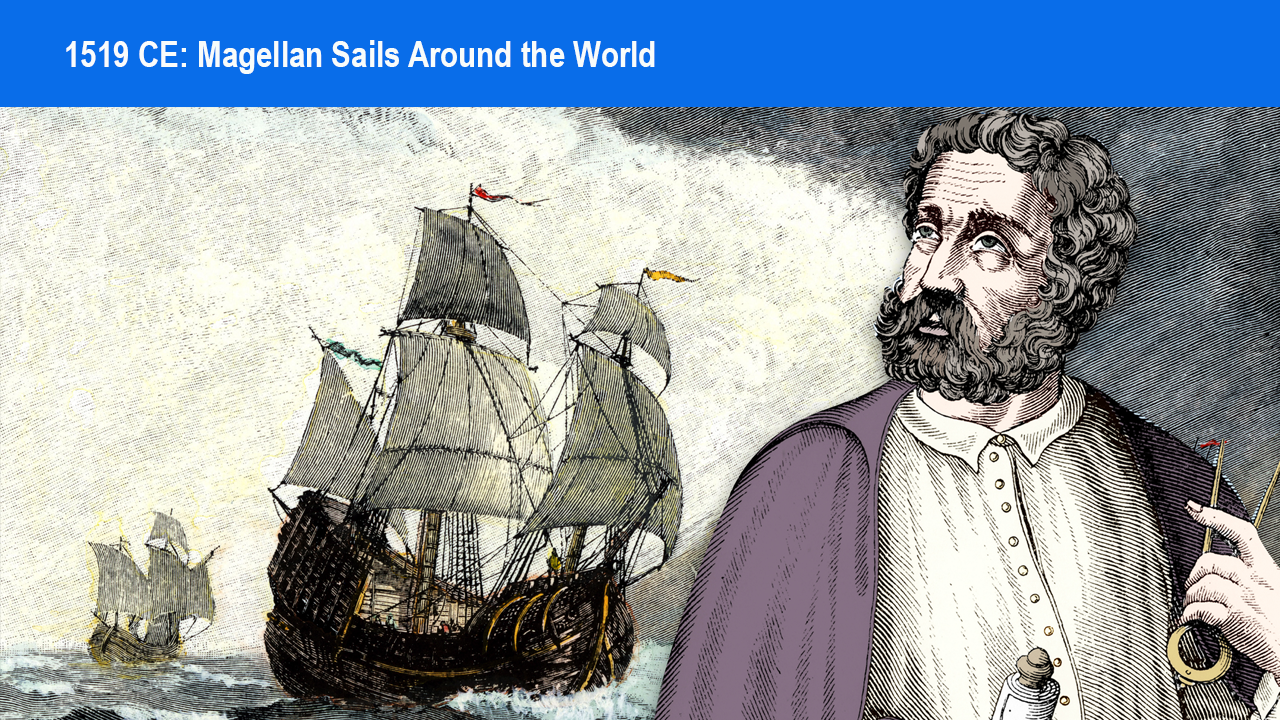 In 1519 Ferdinand Magellan.. leads a Spanish expedition to the East Indies across the Pacific Ocean to open a maritime trade route from the Atlantic to Asia. While Magellan was killed in a battle near the present-day Philippines, some of the expedition survived and circumnavigated the Earth to return to Spain in 1522.
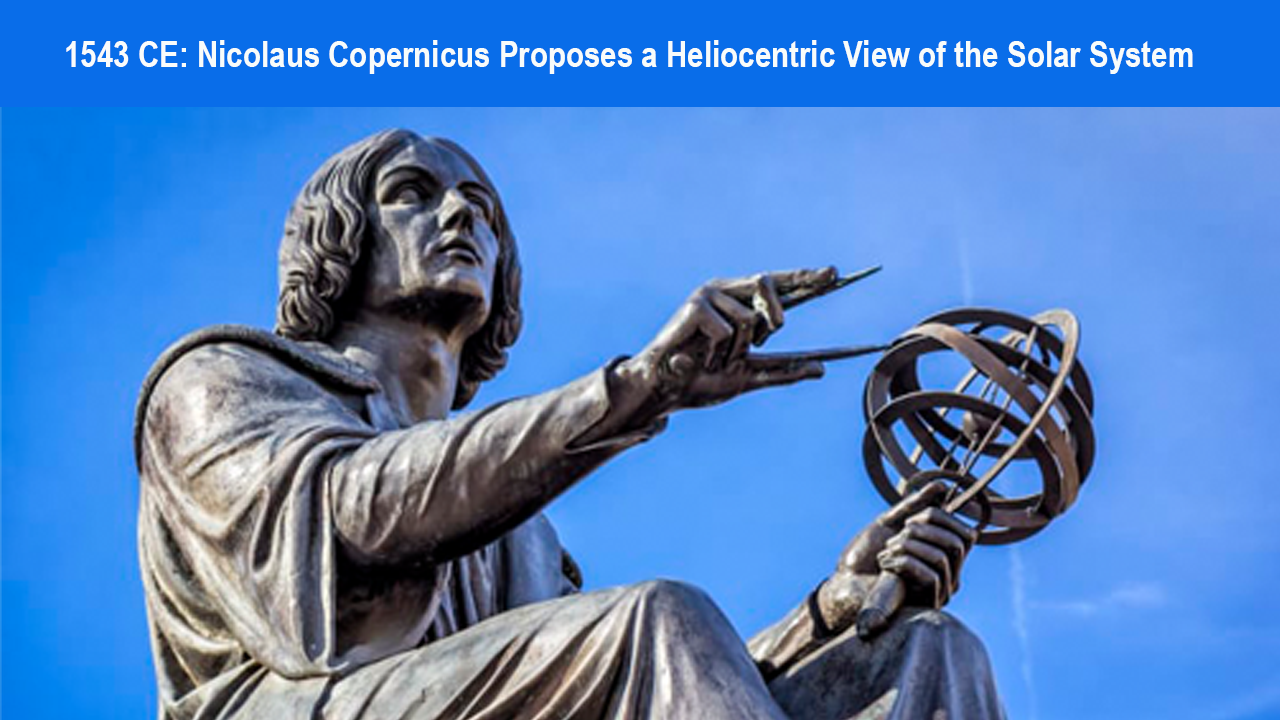 In 1543, Nicolaus Copernicus formulated a model of the universe that placed the Sun rather than Earth at its center. In all likelihood, Copernicus developed his model independently of Aristarchus of Samos, an ancient Greek astronomer who had formulated such a model some eighteen centuries earlier.
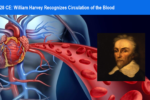
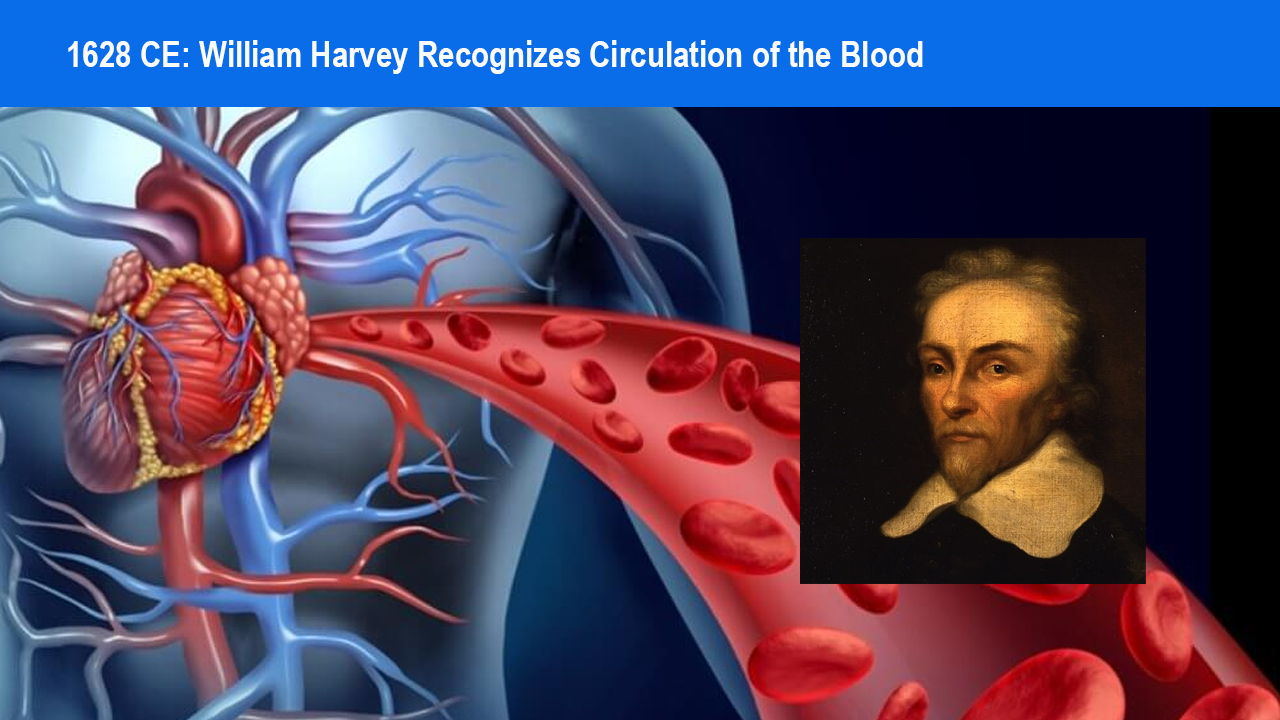 In 1623, English physician William Harvey became the first to describe completely, and in detail, the systemic circulation and properties of blood being pumped to the brain and the rest of the body by the heart.
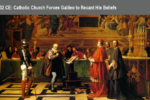
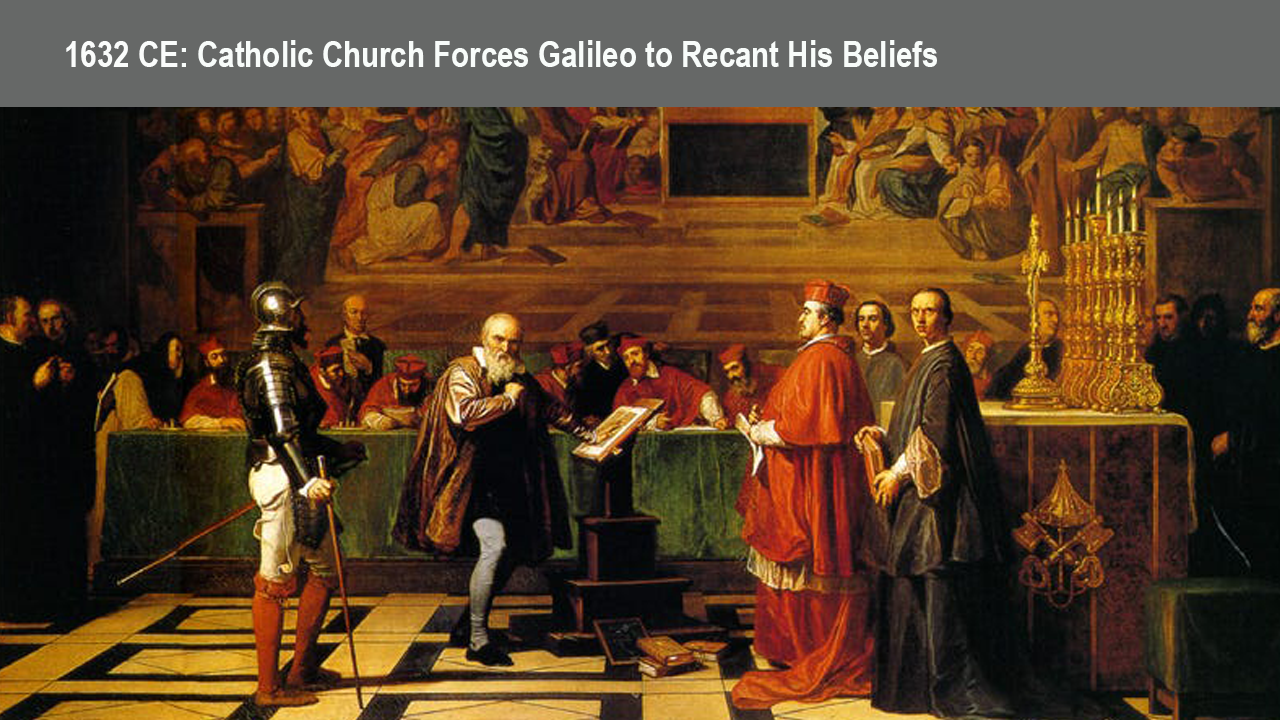 Italian Galileo Galilei invented a telescope and has been called the "father" of observational astronomy, modern physics, and the scientific method. Galileo championed Copernican heliocentrism and was met with opposition from the Catholic Church. The matter was investigated by the Roman Inquisition which concluded that heliocentrism was foolish, absurd, and heretical since it contradicted Holy Scripture.
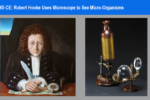
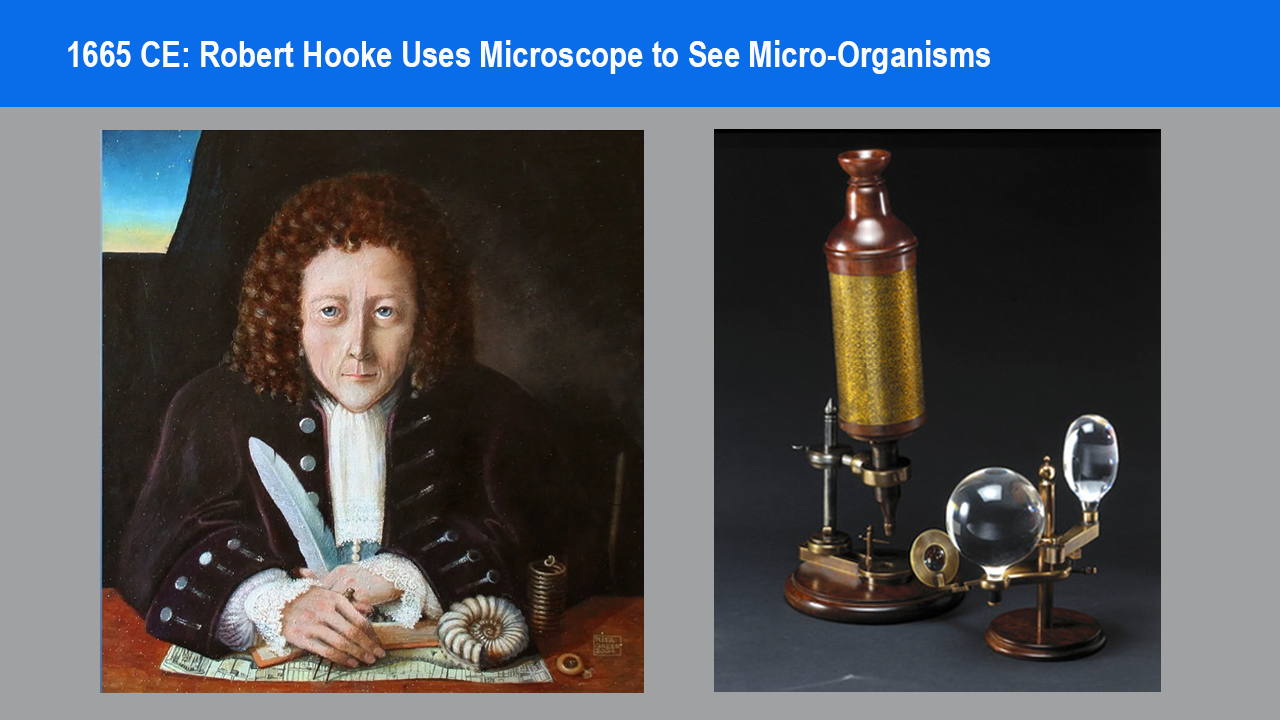 While Galileo looked at the heavens, Englishman Robert Hooke using a microscope, was the first to see microorganisms. Hooke's 1665 book Micrographia spurred further microscopic investigations.
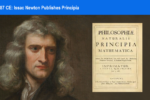
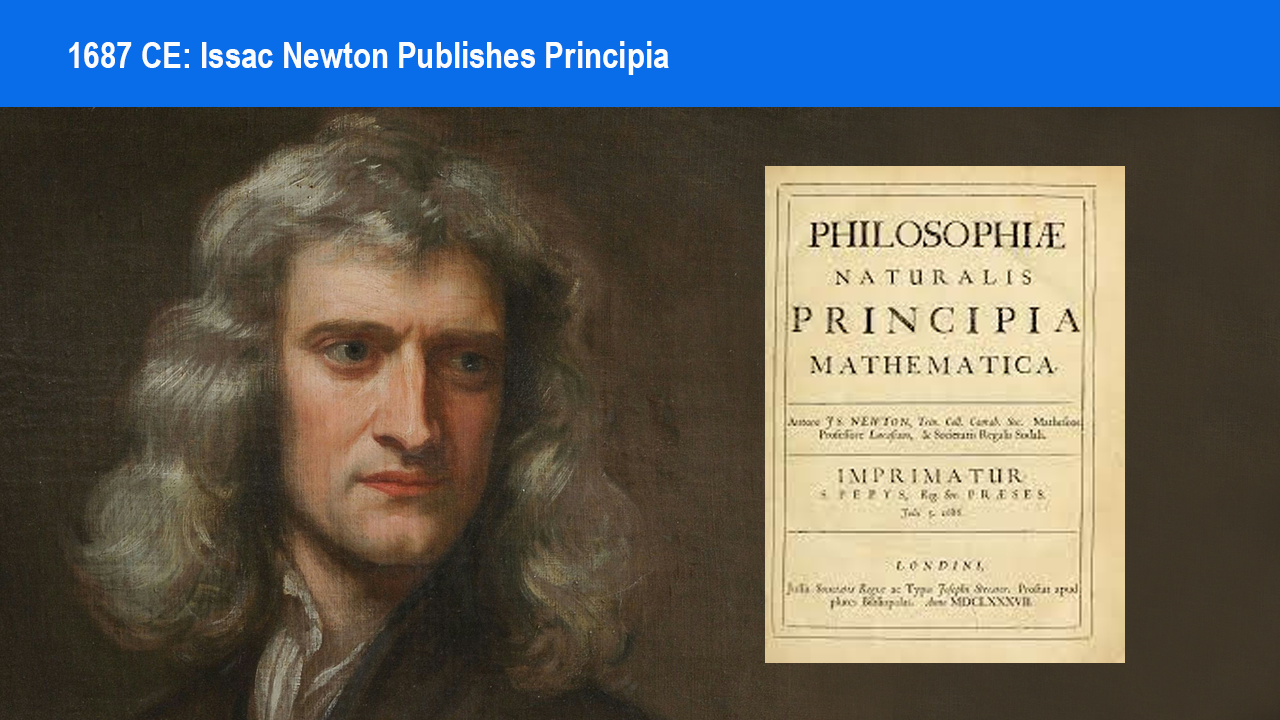 Sir Isaac Newton is widely recognized as one of the greatest mathematicians and scientists of all time. He was a key figure in the philosophical revolution known as the Enlightenment. In “Principia”, first published in 1687, Newton formulated the laws of motion and universal gravitation that formed the dominant scientific viewpoint until it was superseded by the theory of relativity. He would also make contributions in optics and calculus.
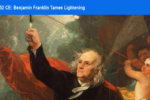
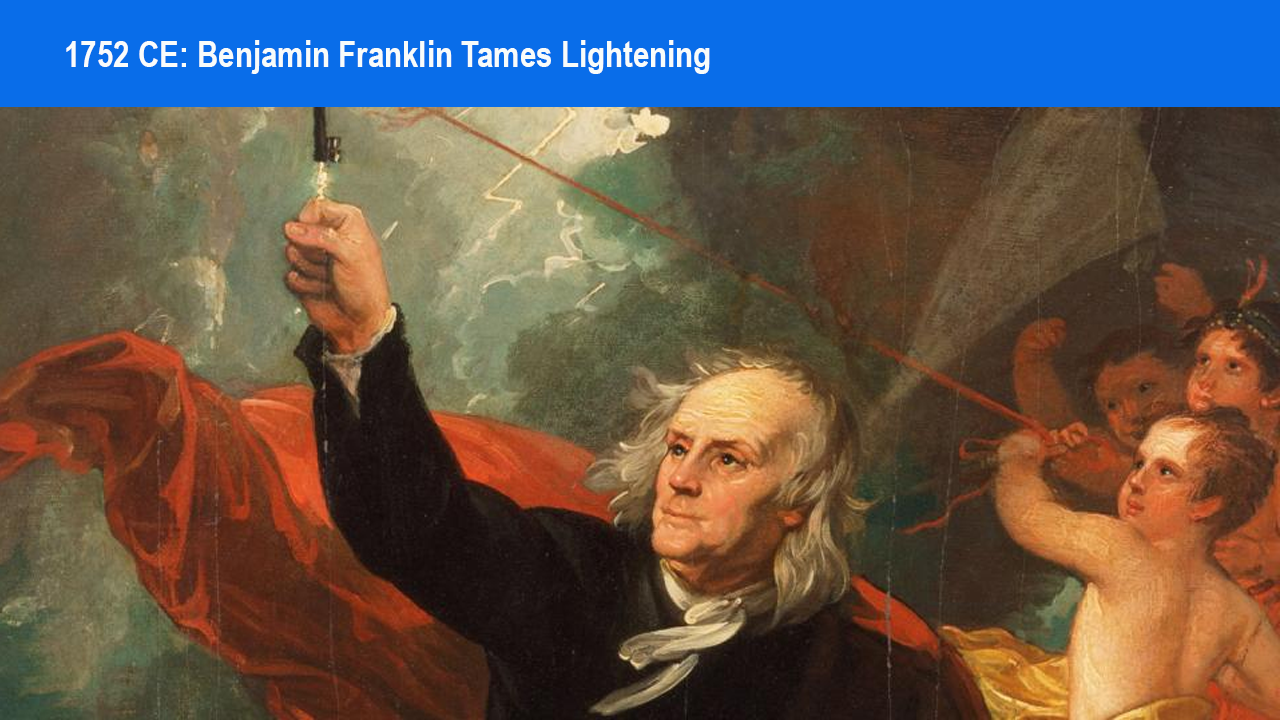 Benjamin Franklin proposed an experiment to prove that lightning is electricity by flying a kite in a storm. On May 10, 1752, Thomas-François Dalibard of France conducted Franklin's experiment and extracted electrical sparks from a cloud. Franklin described the experiment in his newspaper, The Pennsylvania Gazette without mentioning whether he himself had performed it.
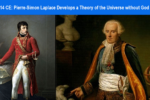
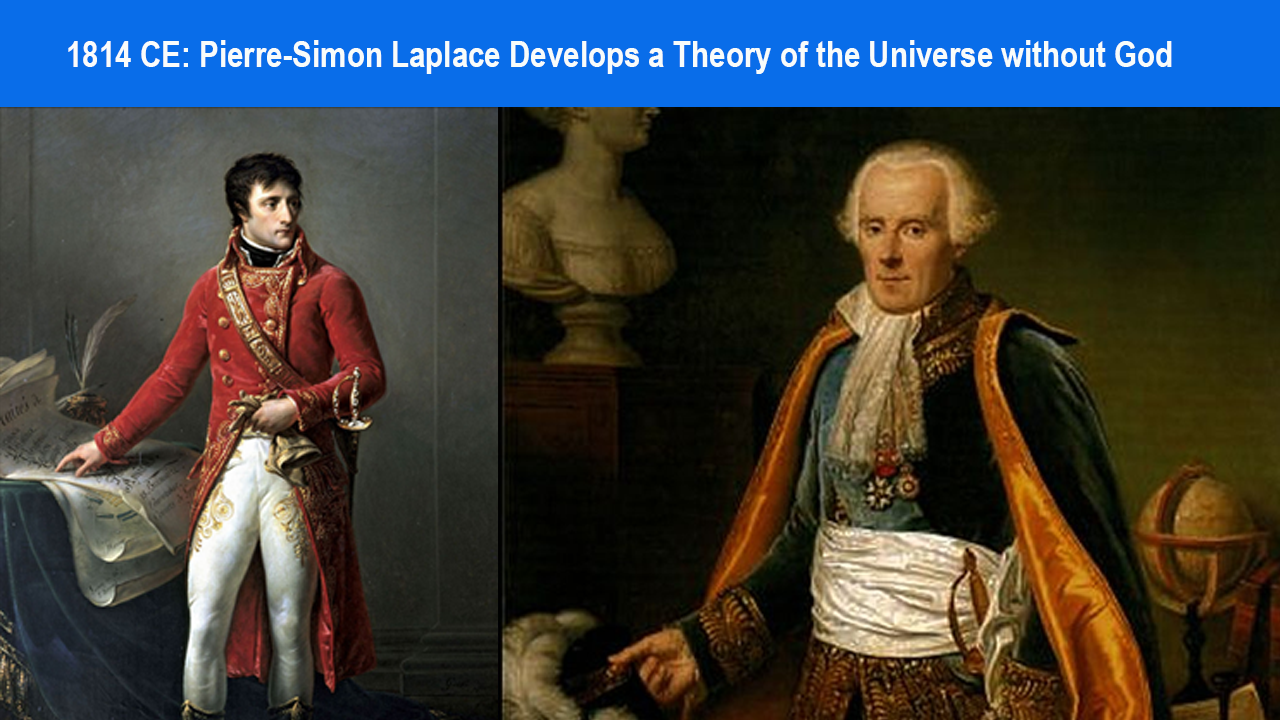 Pierre-Simon Laplace is remembered as one of the greatest scientists of all time. In 1814, he developed a theory of the universe which he presented to Napoleon. As the story goes, Napoleon asked Laplace why the theory contained no mention of God. Laplace is said to have replied, "I have no need of that hypothesis.”
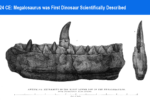
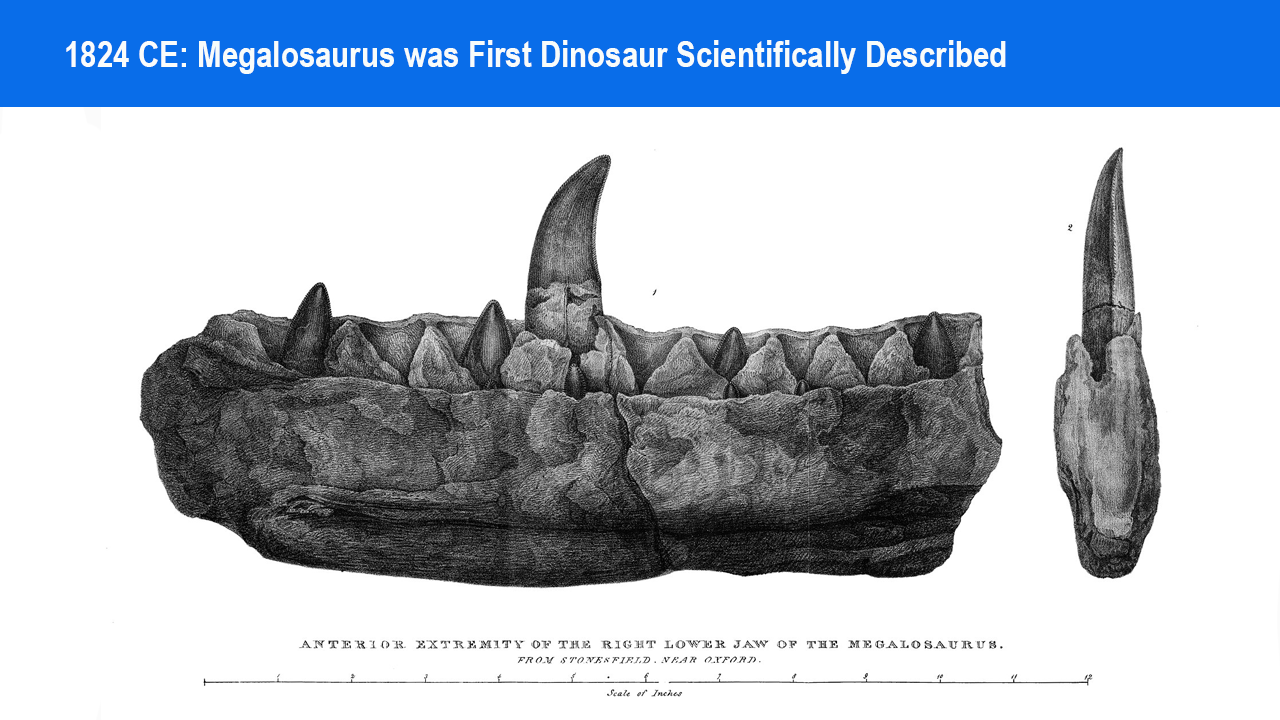 Megalosaurus, found in 1824, is the first dinosaur ever discovered. In Greek, it’s name means "great lizard", and is an extinct carnivorous theropod of the Jurassic period. The first naturalists who investigated Megalosaurus mistook it for a gigantic lizard of 20 meters length. It was later concluded that it was no longer than 9 meters but stood on upright legs.
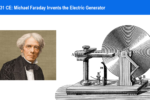
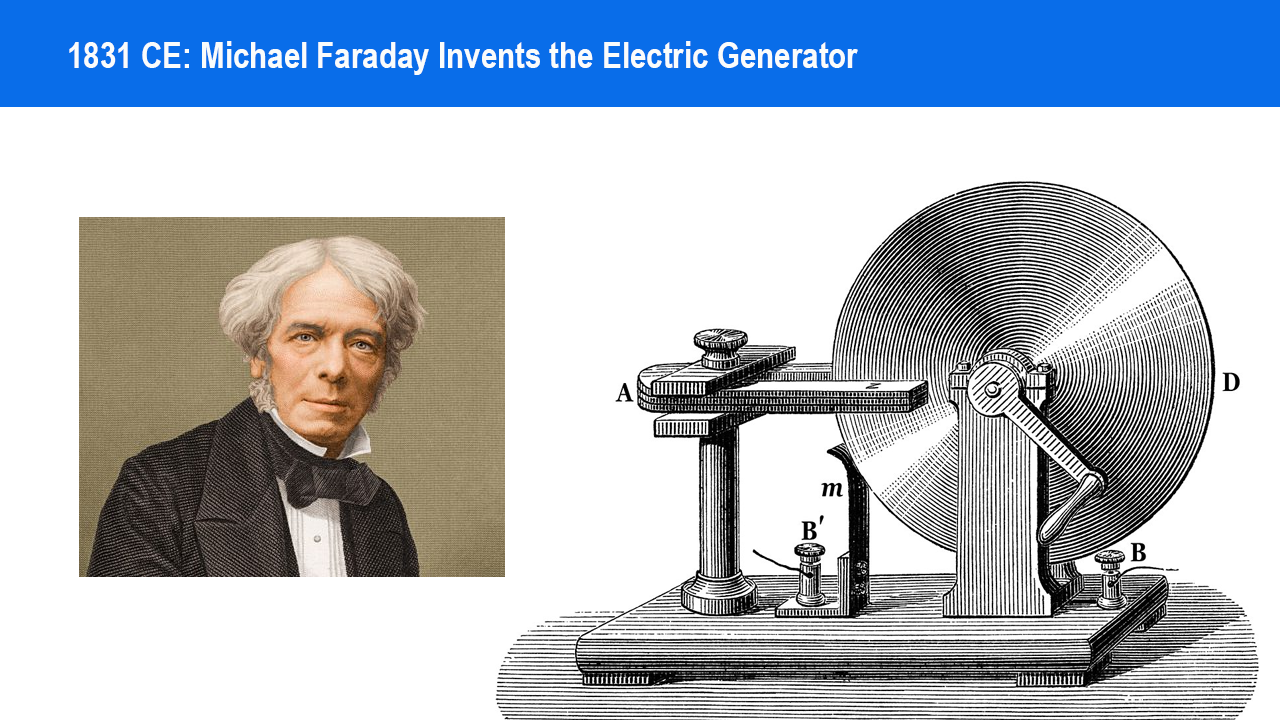 In 1831, english scientist Michael Faraday invented the Electric generator. This invention formed the foundation of electric motor technology, and it was largely due to his efforts that electricity became practical for use in technology.
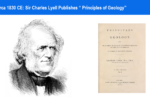
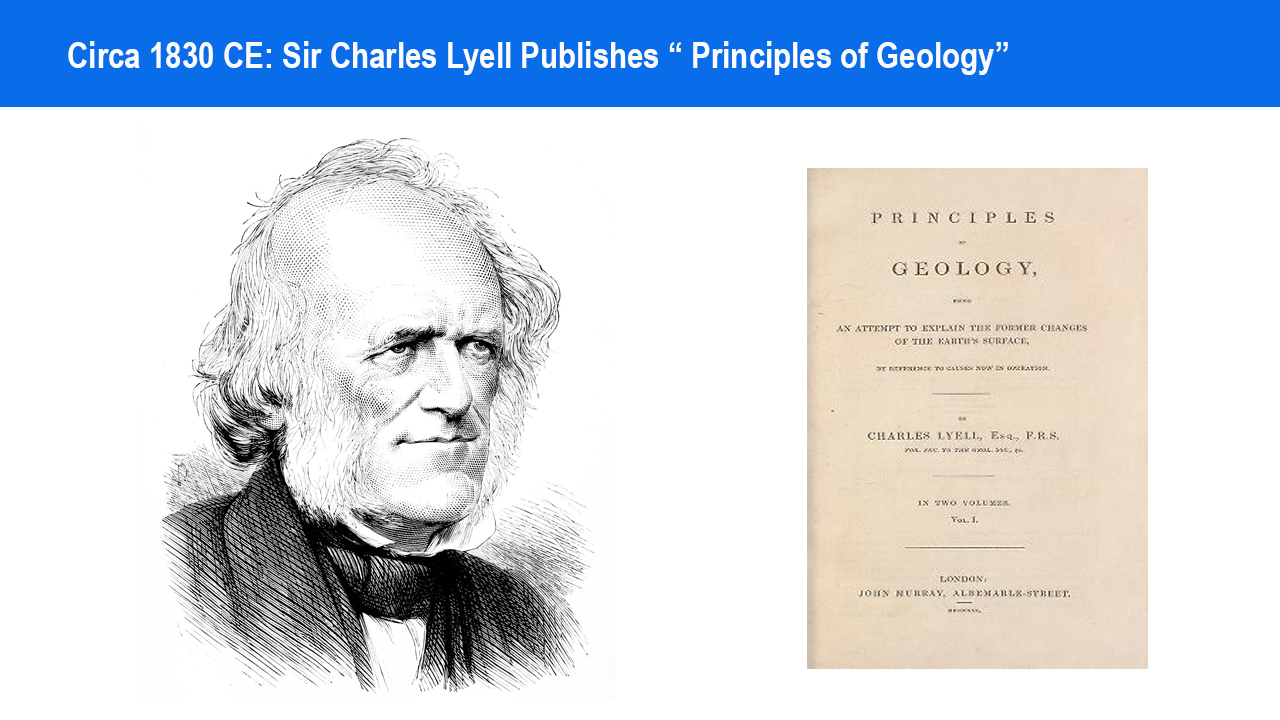 Around 1830, Sir Charles Lyell, was a Scottish geologist who demonstrated the power of known natural causes in explaining the earth's history. He emphasized the significance of "deep time" for understanding the earth and environment and surmised that the earth is vastly old.
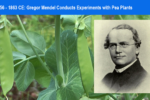
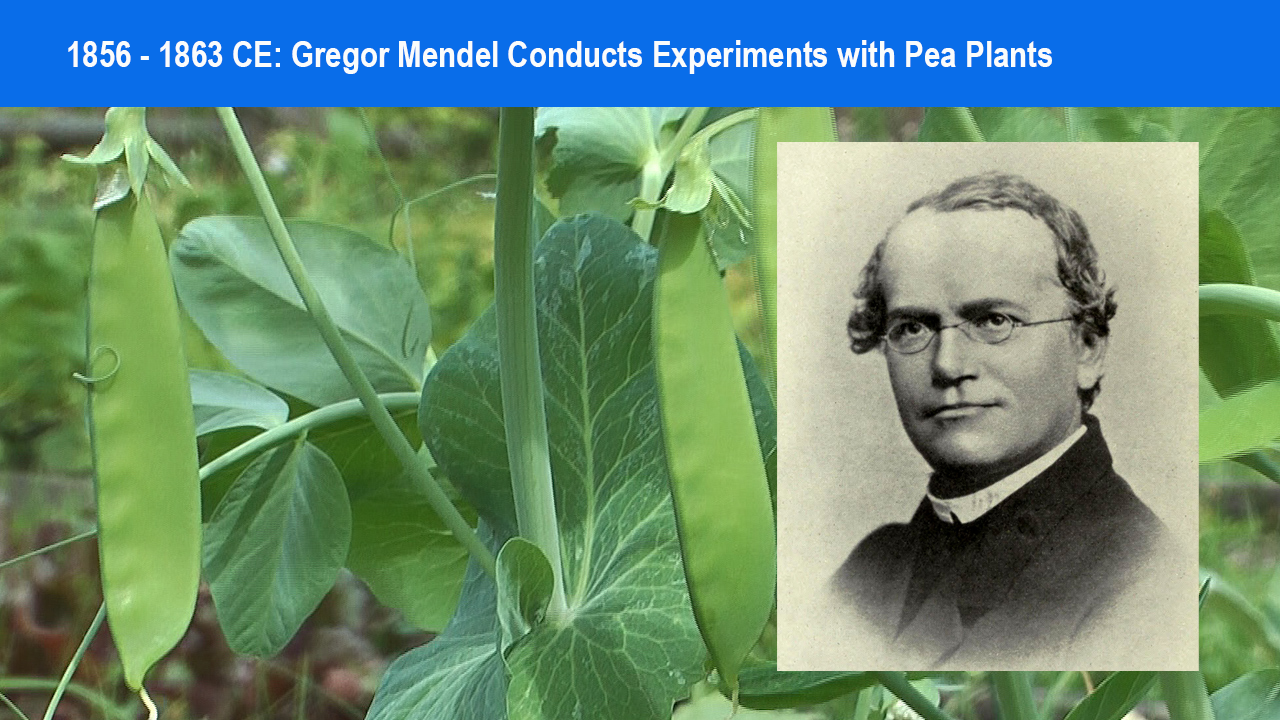 Gregor Johann Mendel….Though farmers had known for millennia that crossbreeding of animals and plants could favor certain desirable traits, Mendel's pea plant experiments conducted between 1856 and 1863 established many of the rules of heredity. He published his work in 1866, demonstrating the actions of invisible "factors"—now called genes—in predictably determine the traits of an organism.
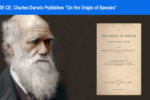
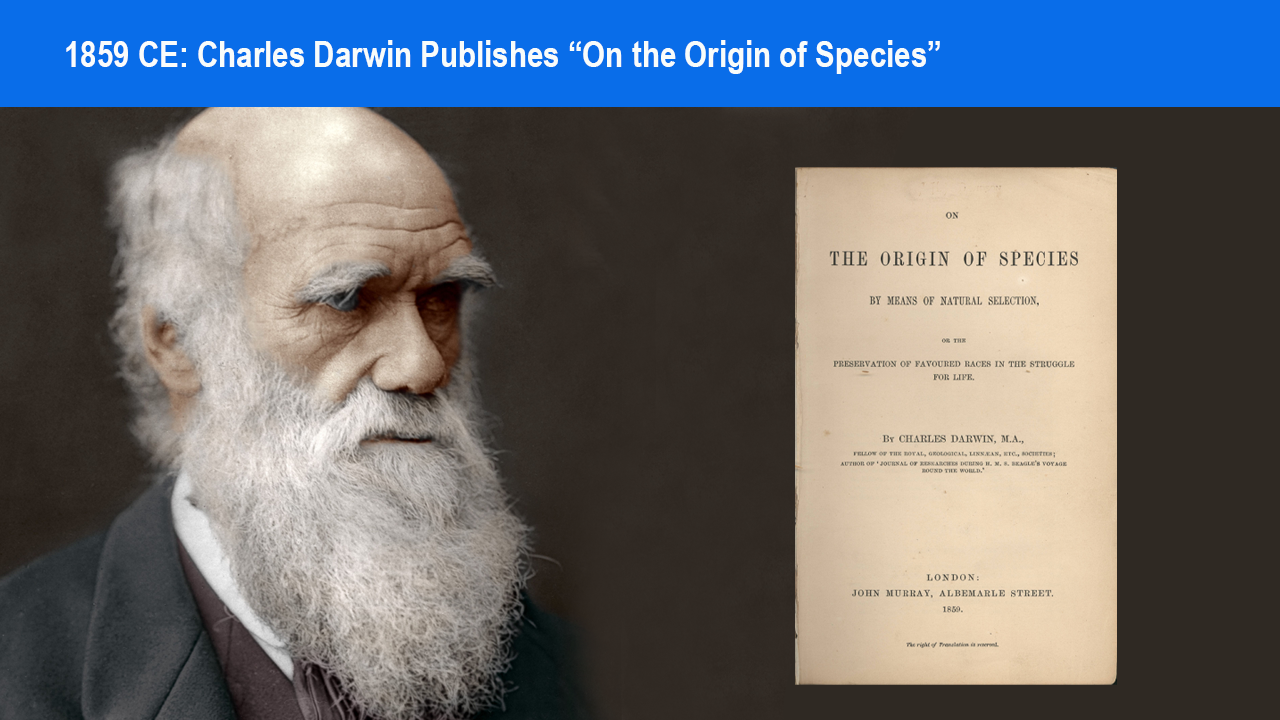 In 1859, Charles Darwin published “On the Origin of Species”. Darwin's book introduced the scientific theory that populations evolve over the course of generations through a process of natural selection. He included evidence collected on his Beagle expedition in the 1830s and subsequent findings from research, correspondence, and experimentation.
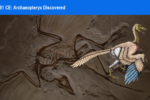
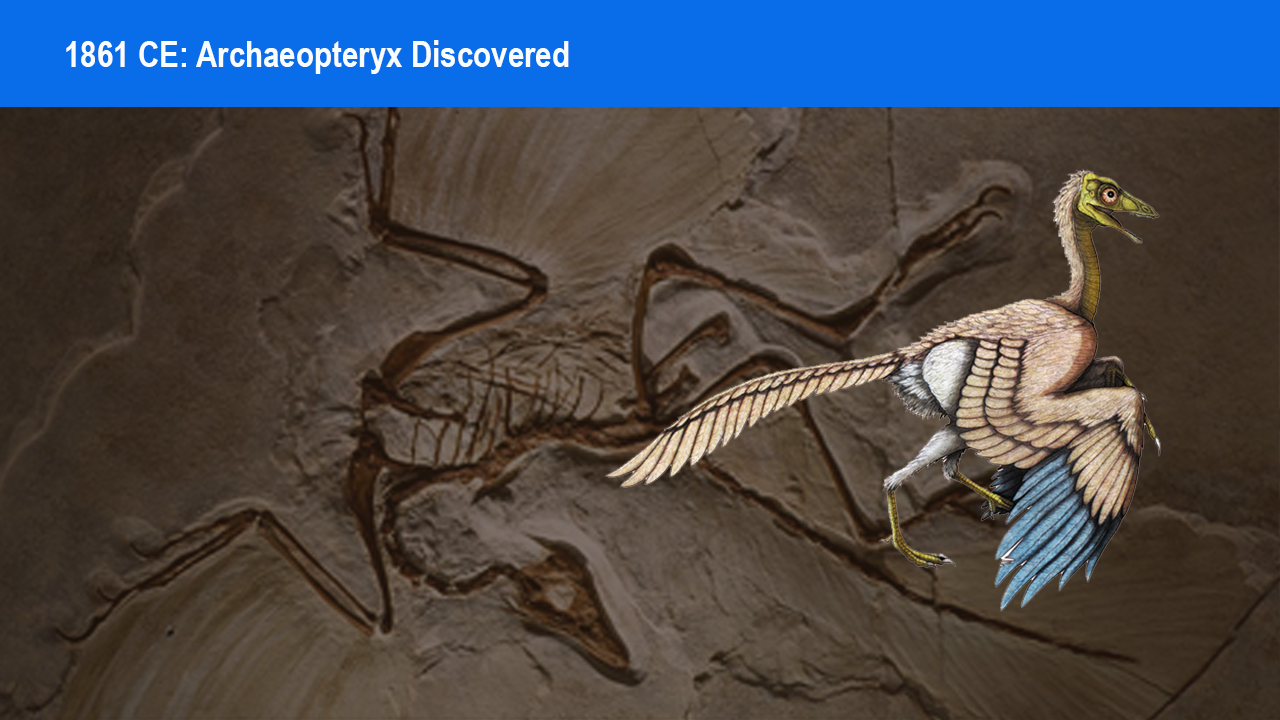 In 1861, Archaeopteryx was discovered. This early avian had much in common with small dinosaurs… jaws, sharp teeth, three fingers with claws, a long bony tail, killing claw, feathers and various features of the skeleton. Archaeopteryx seemed to confirm Darwin's theories and has since become a key piece of evidence for the origin of birds, the transitional fossils debate, and confirmation of evolution.
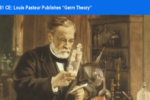
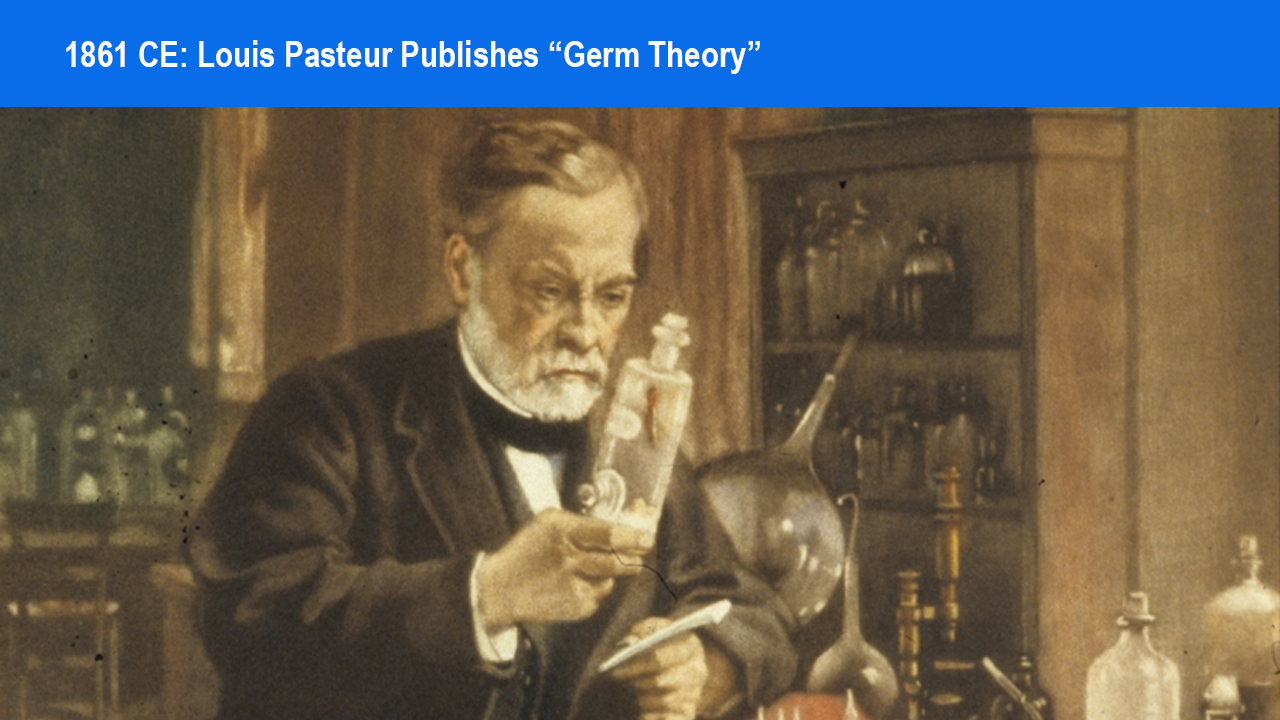 In 1861 Louis Pasteur published the Germ theory of disease. It states that microorganisms known as pathogens …which are too small to see without magnification…can invade humans and other animals. Their growth and reproduction within their hosts can cause disease. "Germ" may refer to bacterium, fungi, viruses, prions, or viroids.
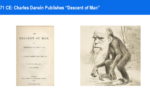
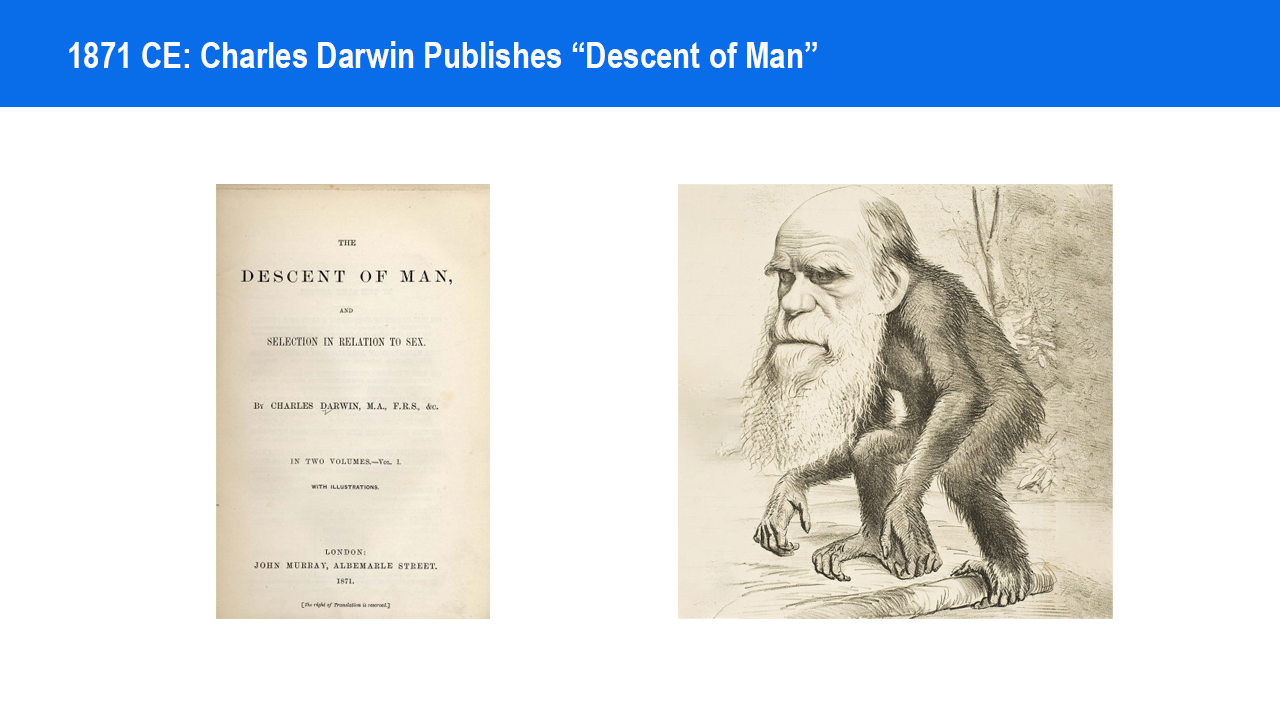 In 1871, Darwin published The Descent of Man, and Selection in Relation to Sex. It applied evolutionary theory to human evolution, and detailed his theory of sexual selection, a form of biological adaptation related to natural selection. The book discusses differences between sexes, the dominant role of women in mate choice, and the relevance of the evolutionary theory to society.
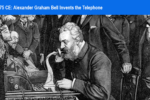
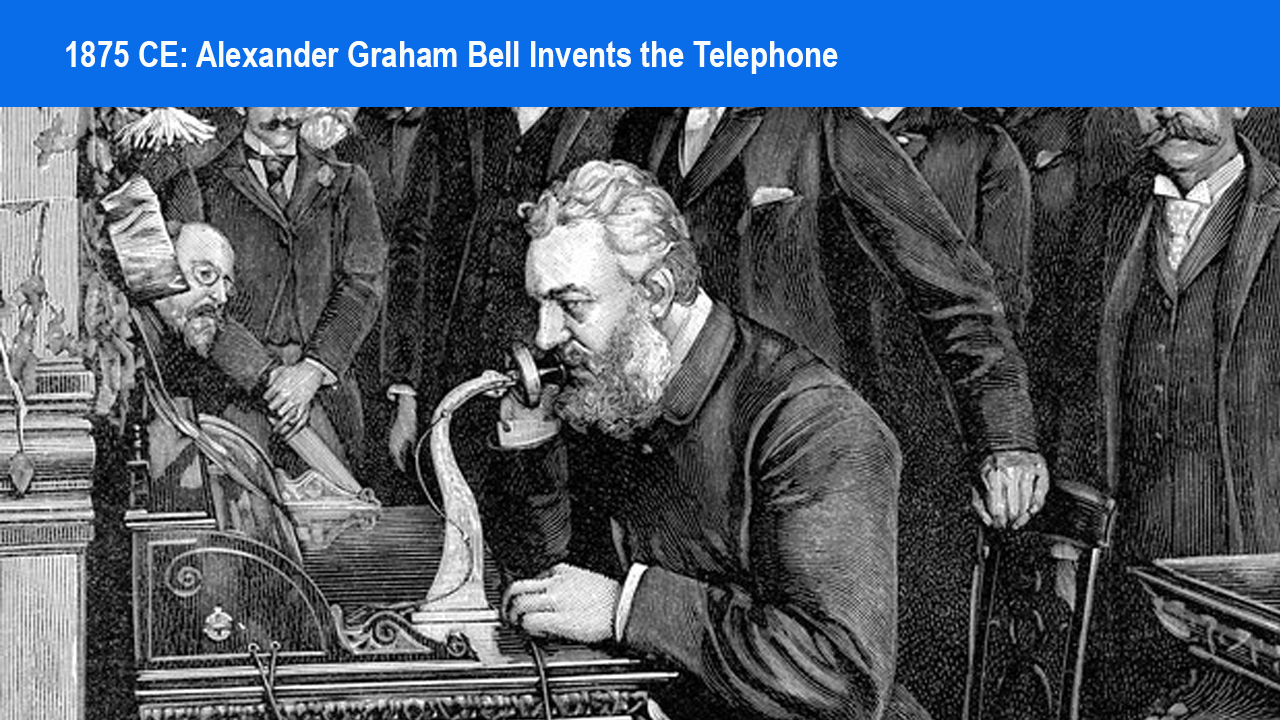 In 1875, Alexander Graham Bell invented the telephone and received a US patent for the device by 1876. The device converts sound, typically human voice, into electronic signals that are transmitted via cables to another device which reproduces the sound for the receiving user. This instrument would became rapidly indispensable in business, government, and in households.
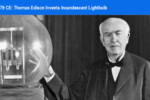
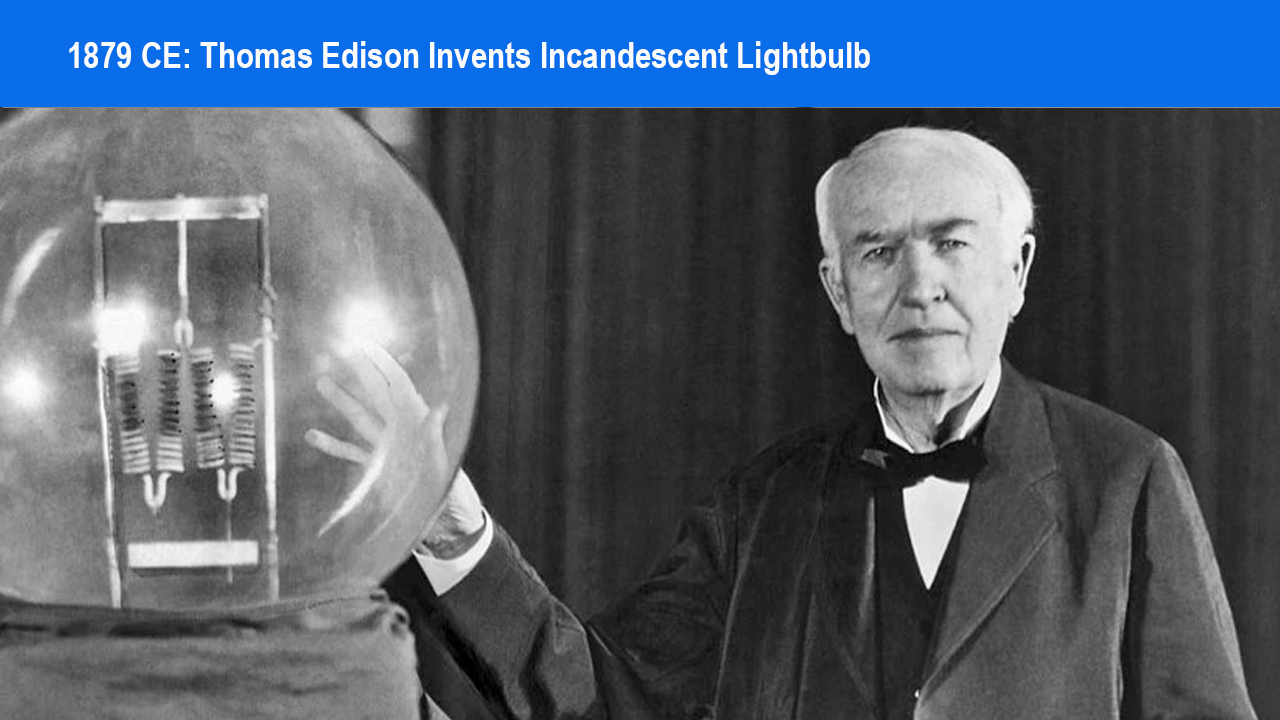 By January 1879, at his laboratory in Menlo Park New Jersey, Thomas Edison built his first high resistance, incandescent electric light. It worked by passing electricity through a thin platinum filament in the glass vacuum bulb, which delayed the filament from melting. Still, the lamp only burned for a few short hours.
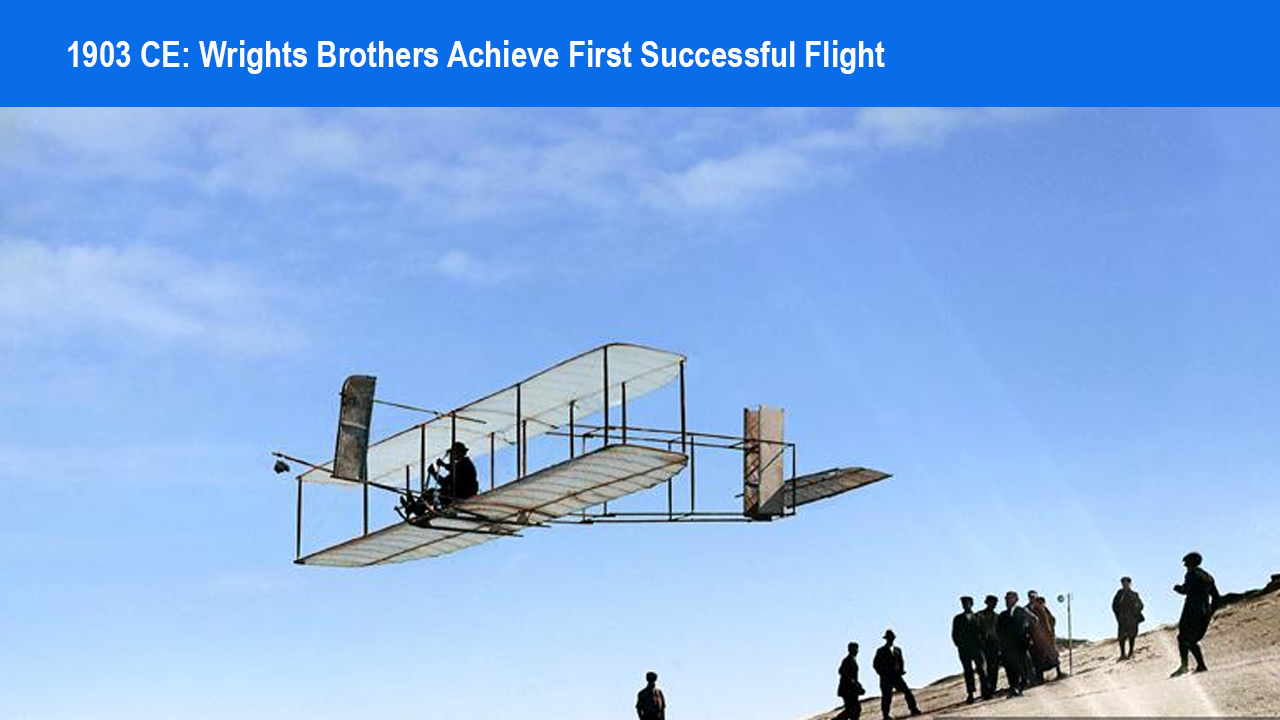 In 1903, Orville and Wilbur Wright made the first controlled, sustained flight of a powered, heavier-than-air aircraft near Kitty Hawk, North Carolina. Using a home-built wind tunnel, the Wrights had collected the data enabling them to design more efficient wings and propellers. They also focused on developing a reliable method of pilot control as the key to solving "the flying problem". Today there are over 25,000 active commercial and 18,000 military aircraft.
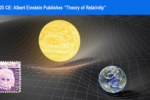
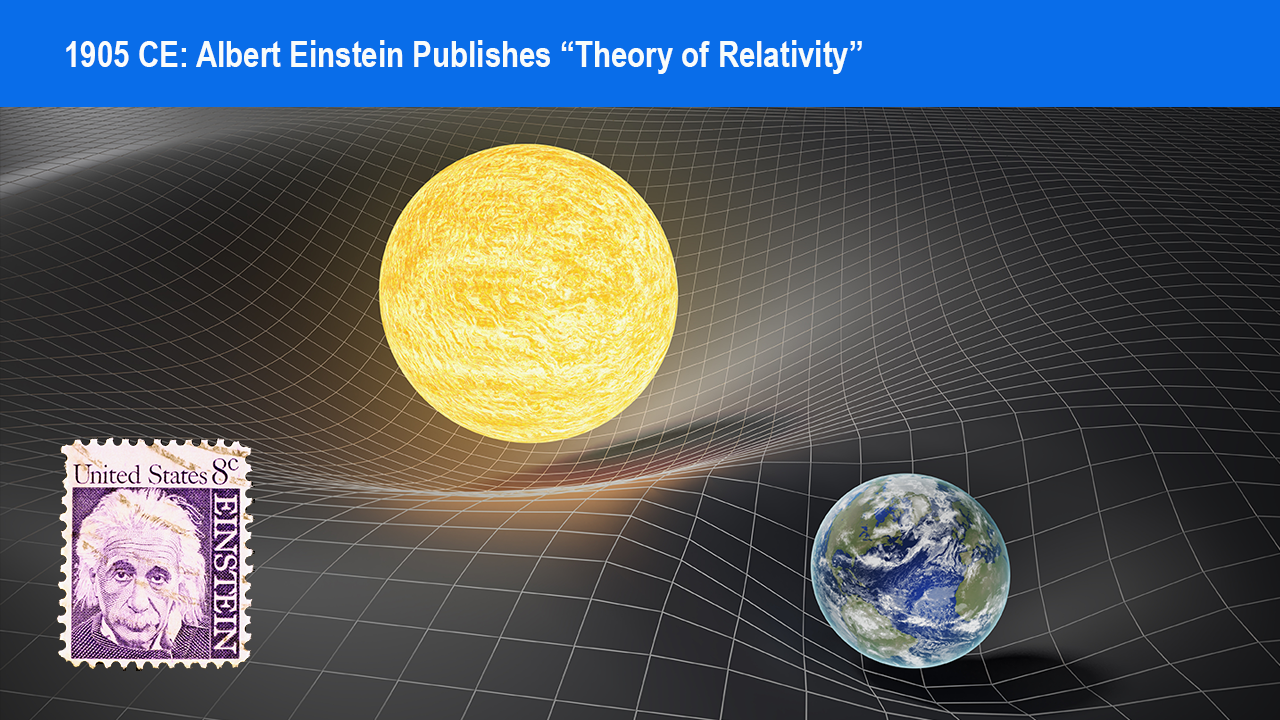 In 1905, German-born Albert Einstein published four groundbreaking papers, on the photoelectric effect, Brownian motion, special relativity, and the equivalence of mass and energy, which were to bring him to the notice of the academic world, at the age of 26. His formula E = mc2, has been dubbed "the world's most famous equation".
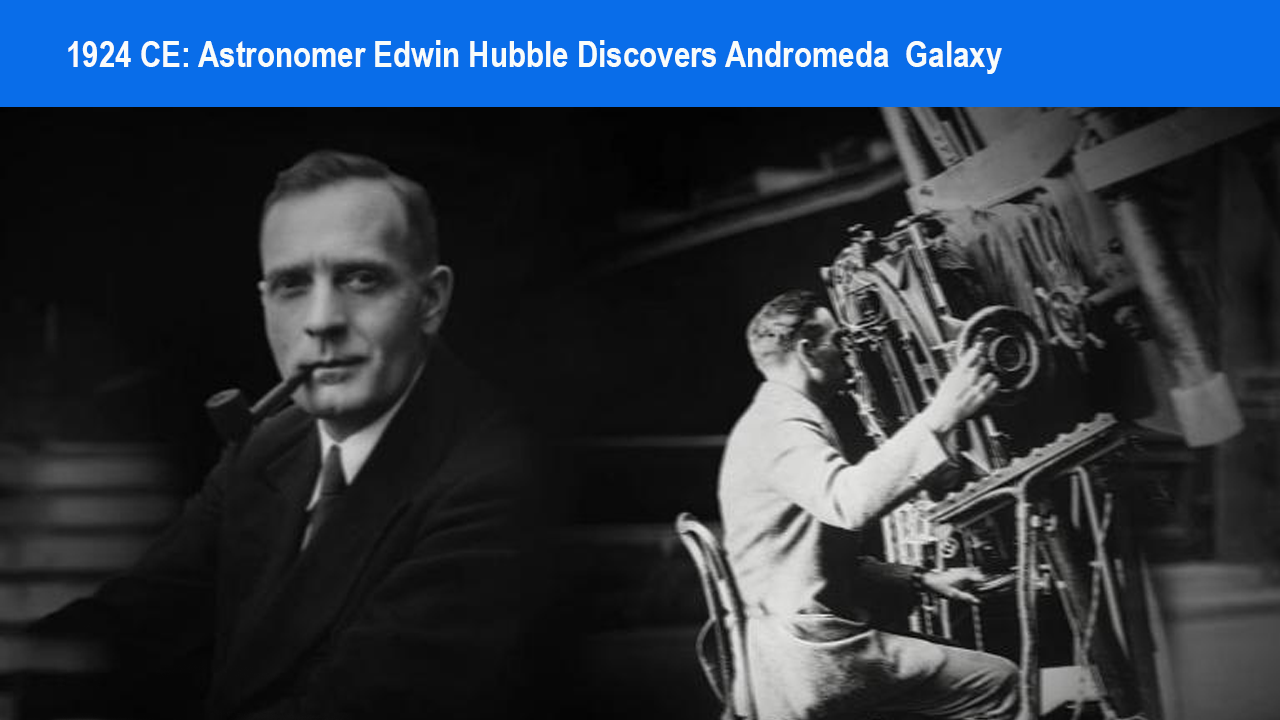 In 1924, American astronomer Edwin Powell Hubble discovered the Andromeda Galaxy. Hubble proved that many objects previously thought to be clouds of dust and gas and classified as "nebulae" were actually galaxies beyond the Milky Way. Hubble's name is most widely recognized for the Hubble Space Telescope, which was named in his honor.
 On July 16, 1945 the world's first nuclear explosion released an amount of energy approximately equal to 20,000 tons of TNT when tested at a site located 210 miles south of Los Alamos, New Mexico. Robert Oppenheimer, who witnessed the detonation, recited a piece of Hindu scripture “Now I am become Death, the destroyer of worlds”.
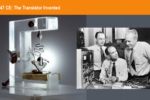
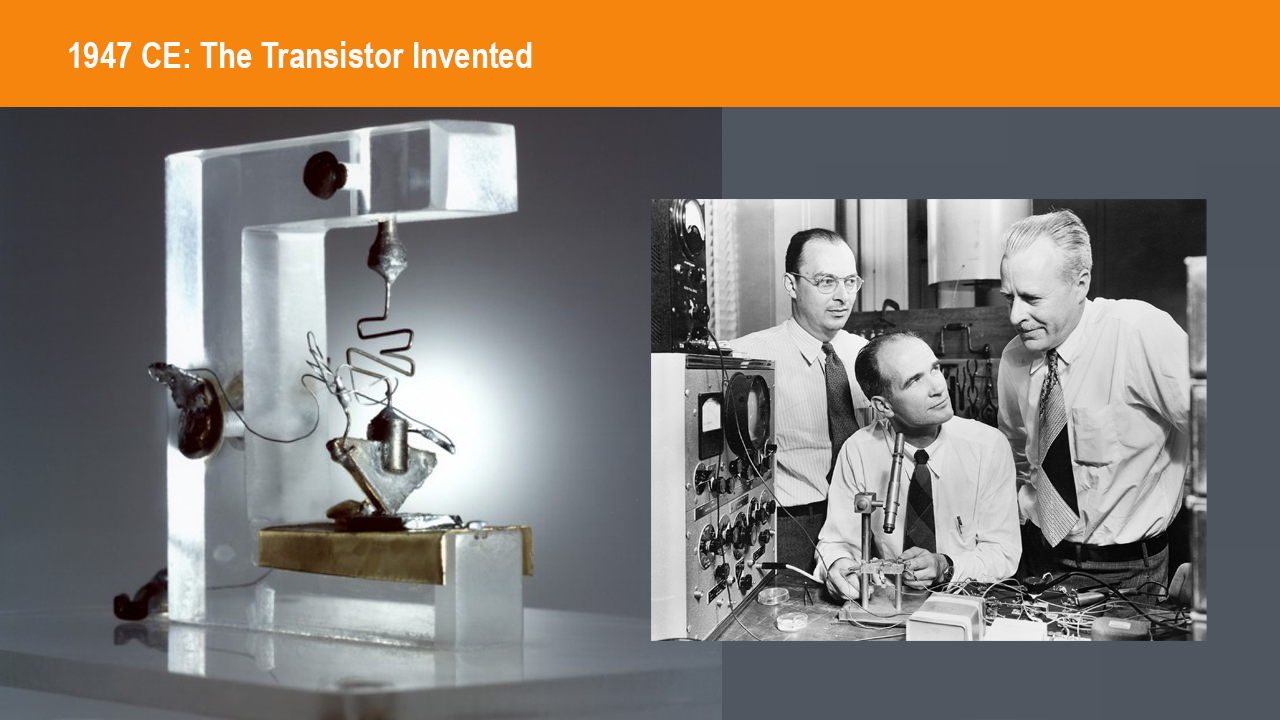 In 1947, John Bardeen and Walter Brattain at AT&T's Bell Labs in New Jersey, observed that when two gold point contacts were applied to a crystal of germanium, a signal was produced with the output power greater than the input. Group leader William Shockley saw the potential in this, and over the next few months worked to greatly expand the knowledge of semiconductors.
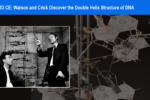
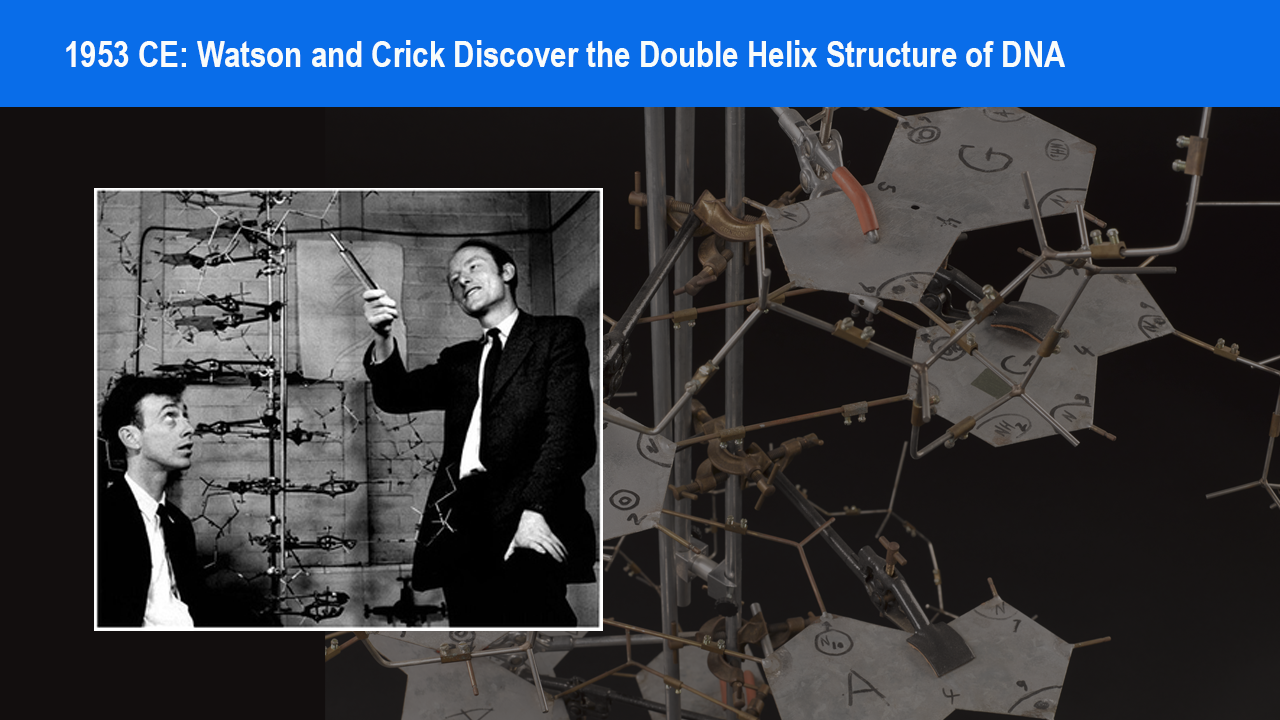 The double-helix model of DNA structure was first published in the journal Nature by James Watson and Francis Crick in 1953 based on the work of Rosalind Franklin and others. Their discovery is widely considered one of the most important scientific discoveries of the 20th century.
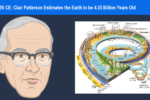
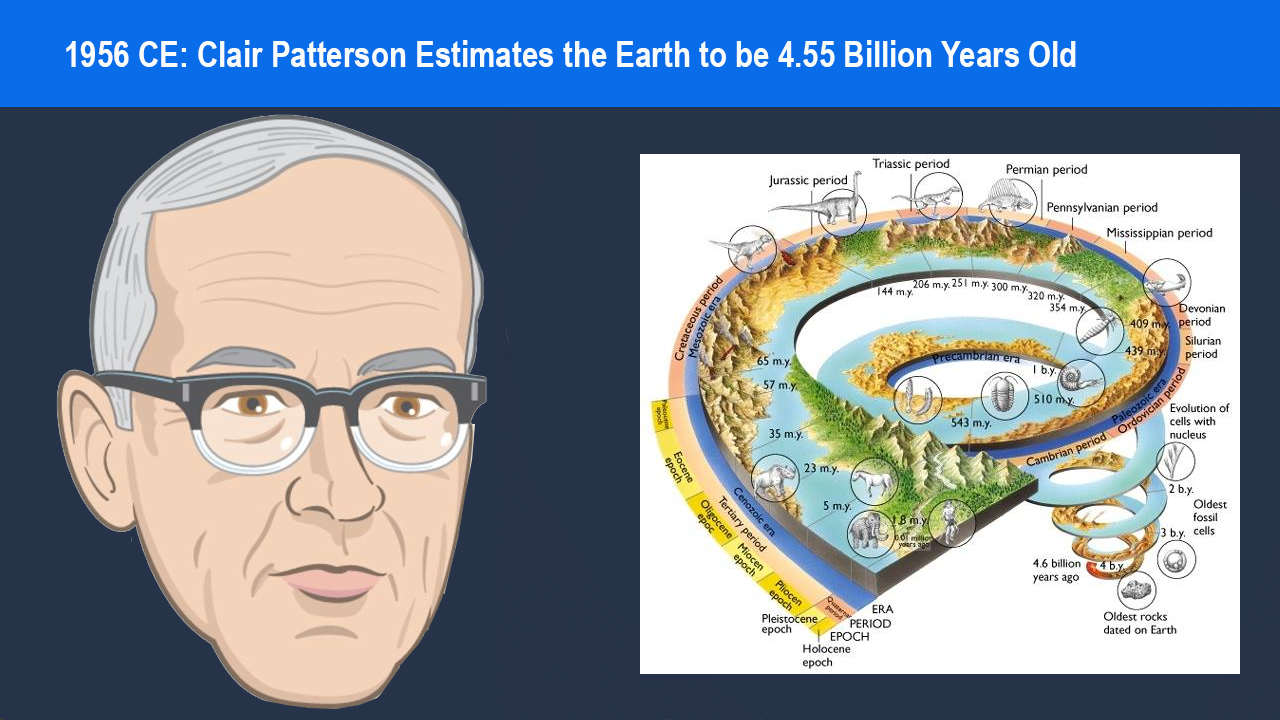 By using lead isotopic data from the Canyon Diablo meteorite, Clair Cameron Patterson calculated an accurate age for the Earth of 4.55 billion years and one that has remained largely unchanged since 1956.
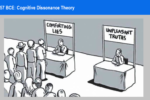
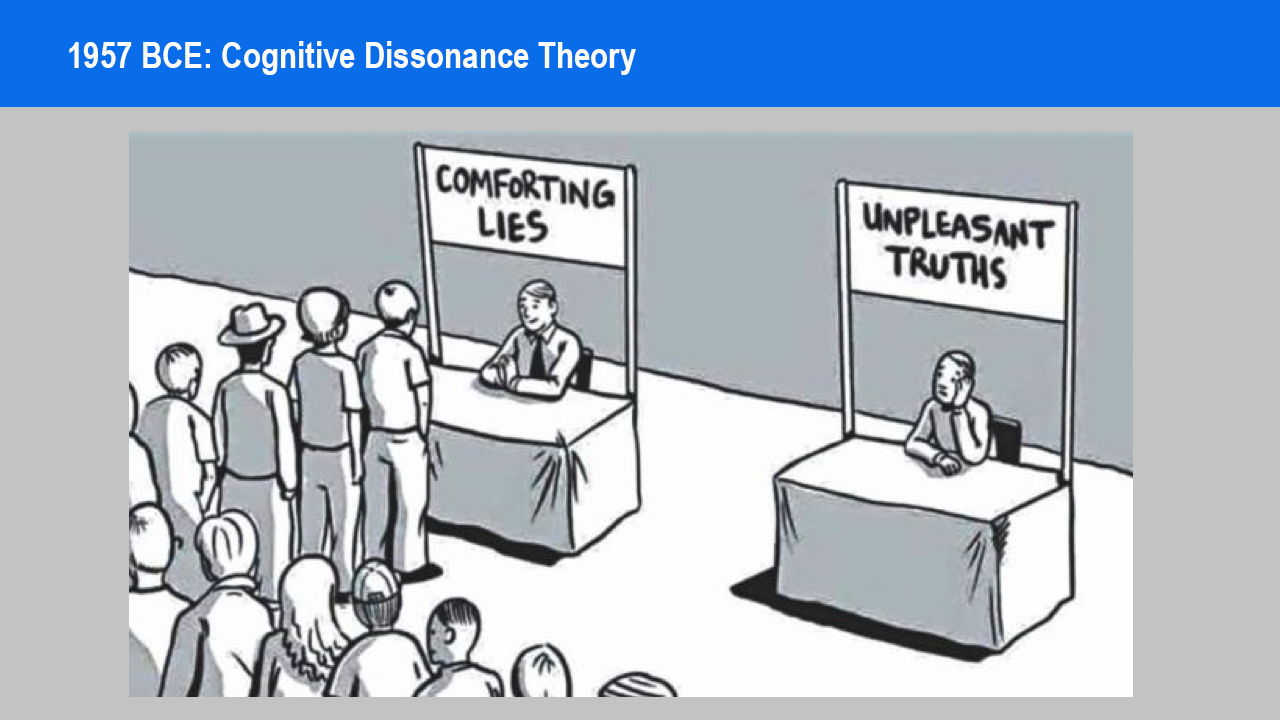 In 1957, in his work “A Theory of Cognitive Dissonance”, Leon Festinger proposed that human beings strive for internal psychological consistency to function mentally in the real world. Coping with the nuances of contradictory ideas or experiences is mentally stressful. It requires energy and effort to sit with those seemingly opposite things that all seem true.
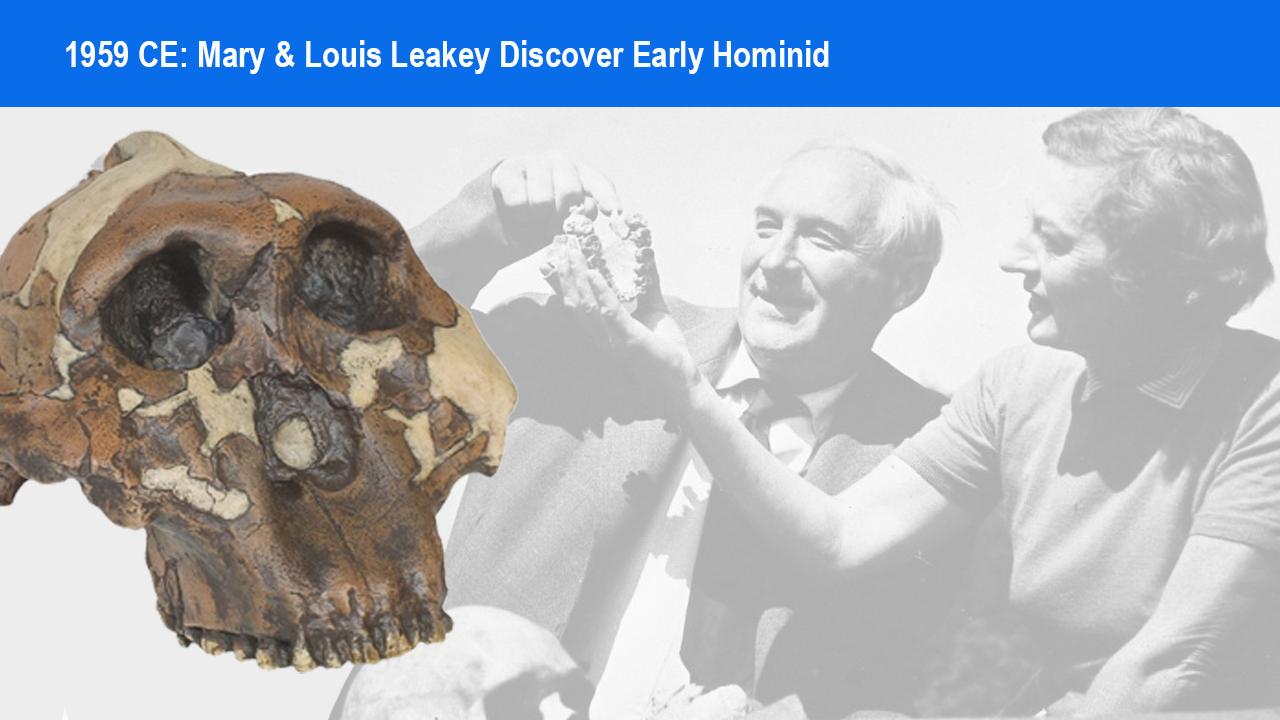 In 1959, Mary & Louis Leakey discovered the skull of an early hominid at Olduvai Gorge in Africa confirming earlier species of man predicted in Darwin's writings. A number of early or proto-human fossils eventually would be found including Australopithecus, Homo Habilis and Homo erectus. Australopithecus fossils have been found that are over 3.7 million years old. The brains of most were roughly 35% of the size of a modern human brain.
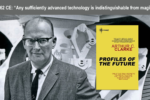
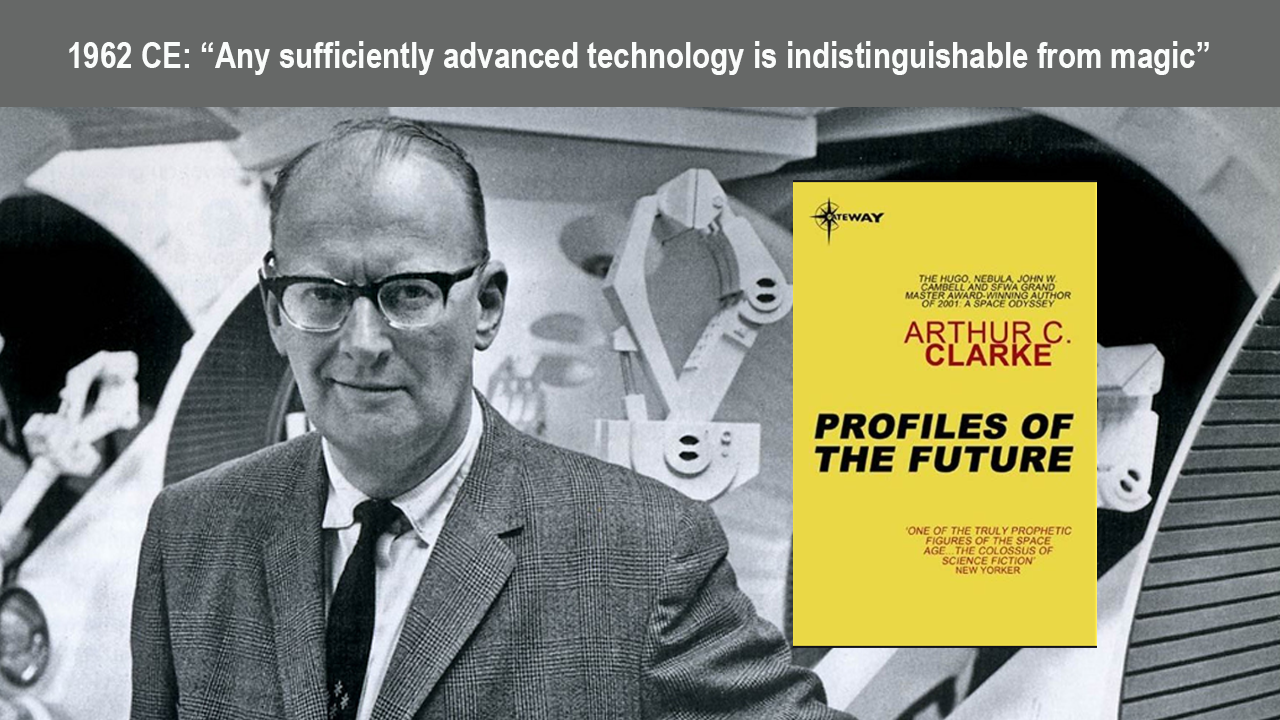 In 1962, in his book “Profiles of the Future” science fiction writer Arthur C. Clarke formulated his famous Three Laws, of which the third law is the best-known and most widely cited: “Any sufficiently advanced technology is indistinguishable from magic”.
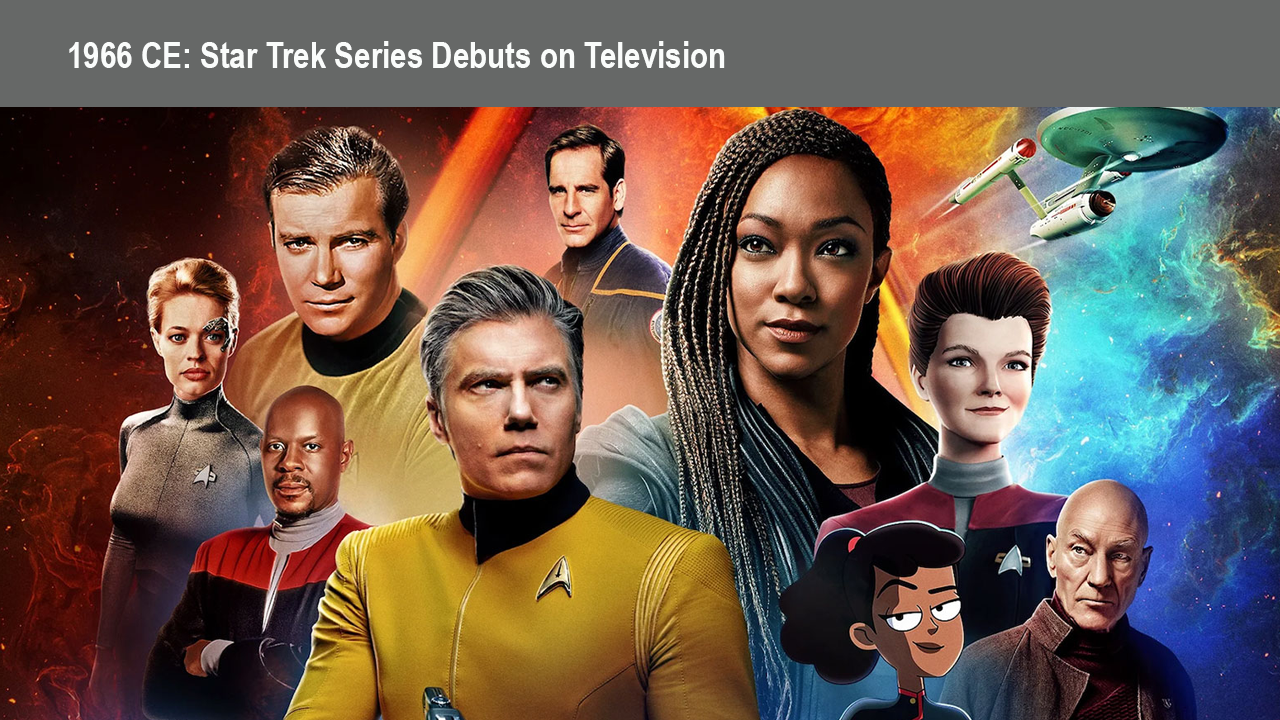 In 1966, a science fiction television program named Star Trek debuted and quickly became a worldwide pop-culture phenomenon. Created by Gene Roddenbery, the franchise would earn over $10.6 billion in revenue from television and films. The show explored a vision for the future including contact with alien species and advances in communication, transport and medical technologies.
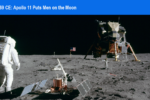
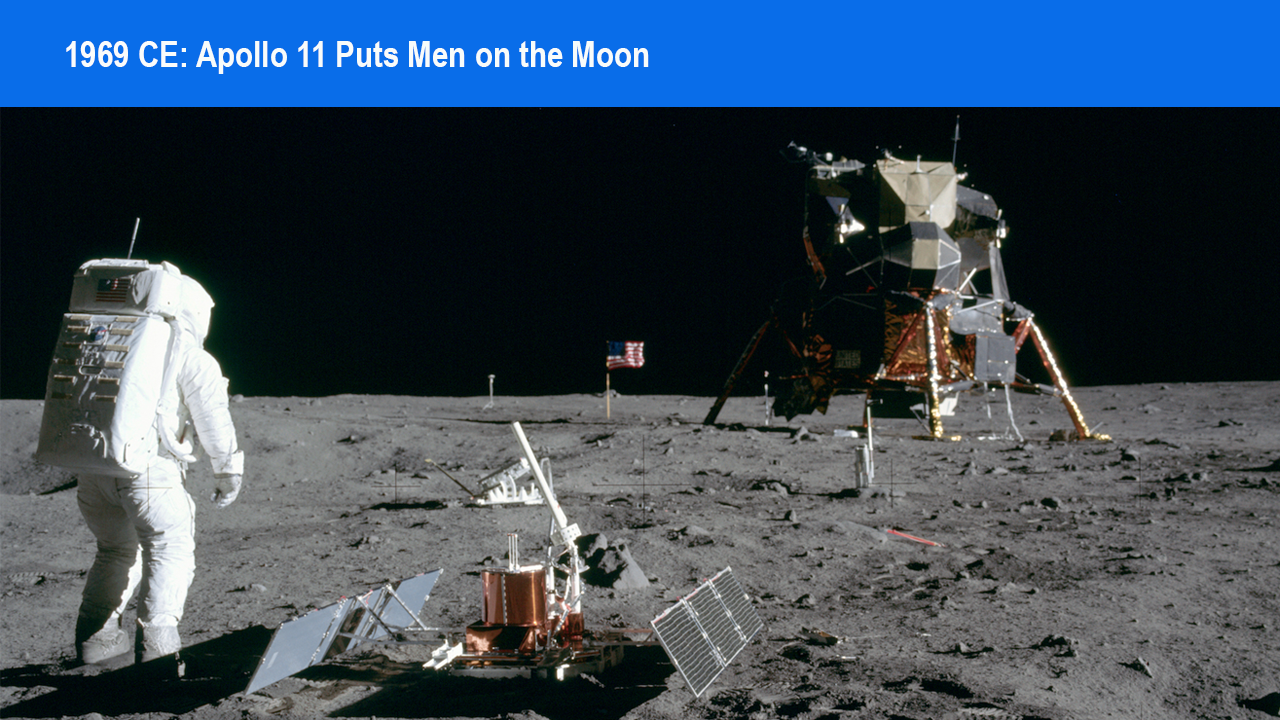 In 1969, Apollo 11’s lunar module Eagle landed on the moon. Commander Neil Armstrong became the first person to step onto the lunar surface and was later joined by crewmate Buzz Aldrin. Armstrong's first step was broadcast on live TV to a worldwide audience. He described the event as "one small step for [a] man, one giant leap for mankind."
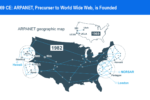
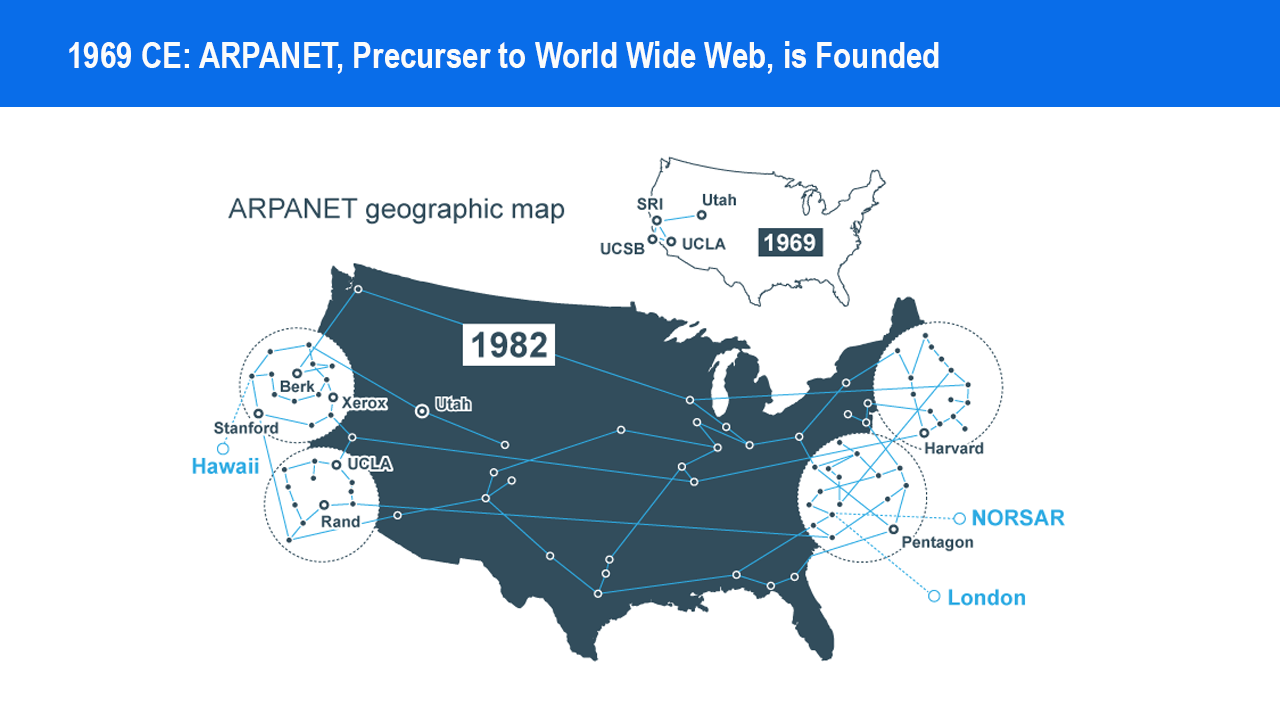 The first permanent ARPANET link was established on 21 November 1969, between the IMP at UCLA and the IMP at the Stanford Research Institute. ARPANET was the first wide-area packet-switched network with distributed control and one of the first networks to implement the TCP/IP protocol suite. Both technologies became the technical foundation of the Internet.
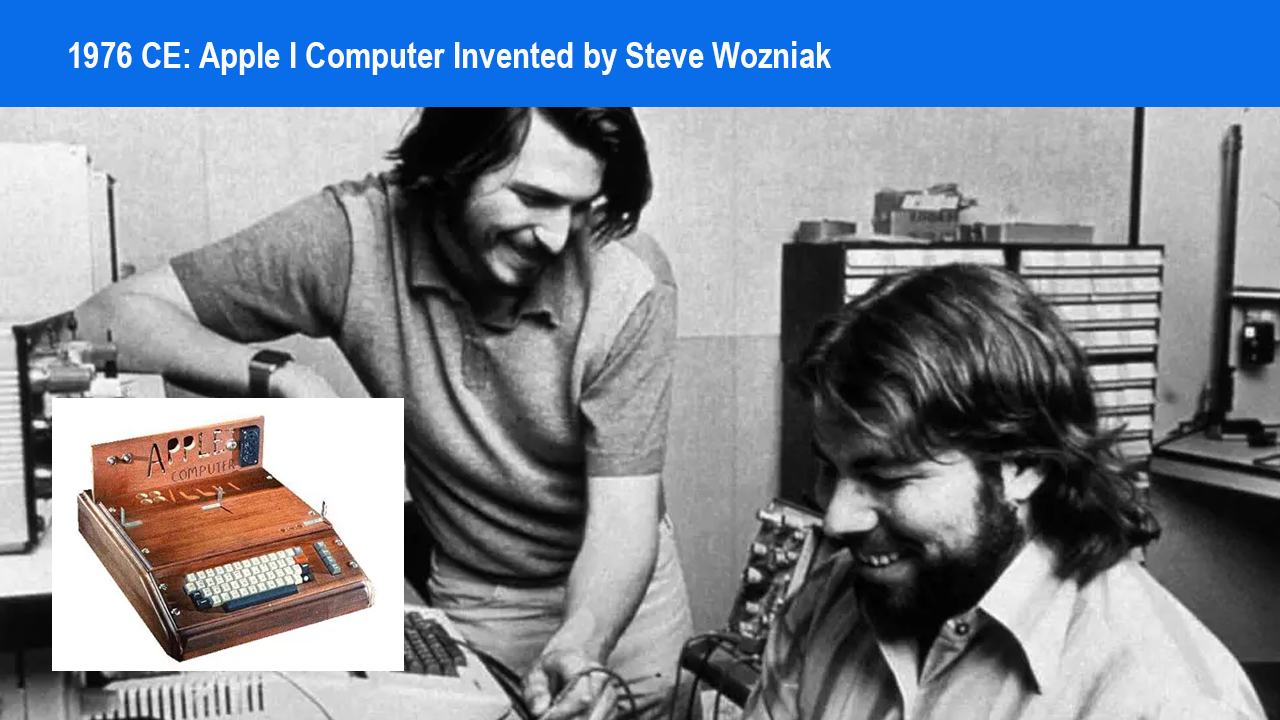 In 1976, engineer Steve Wozniak, while working at HP, built the Apple-1 computer from scratch. He finished his work in March 1976. Together with Steve Jobs and Ronald G. Wayne they founded the company Apple Computer that would make history and change the world by introducing an era of personal computing.
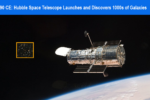
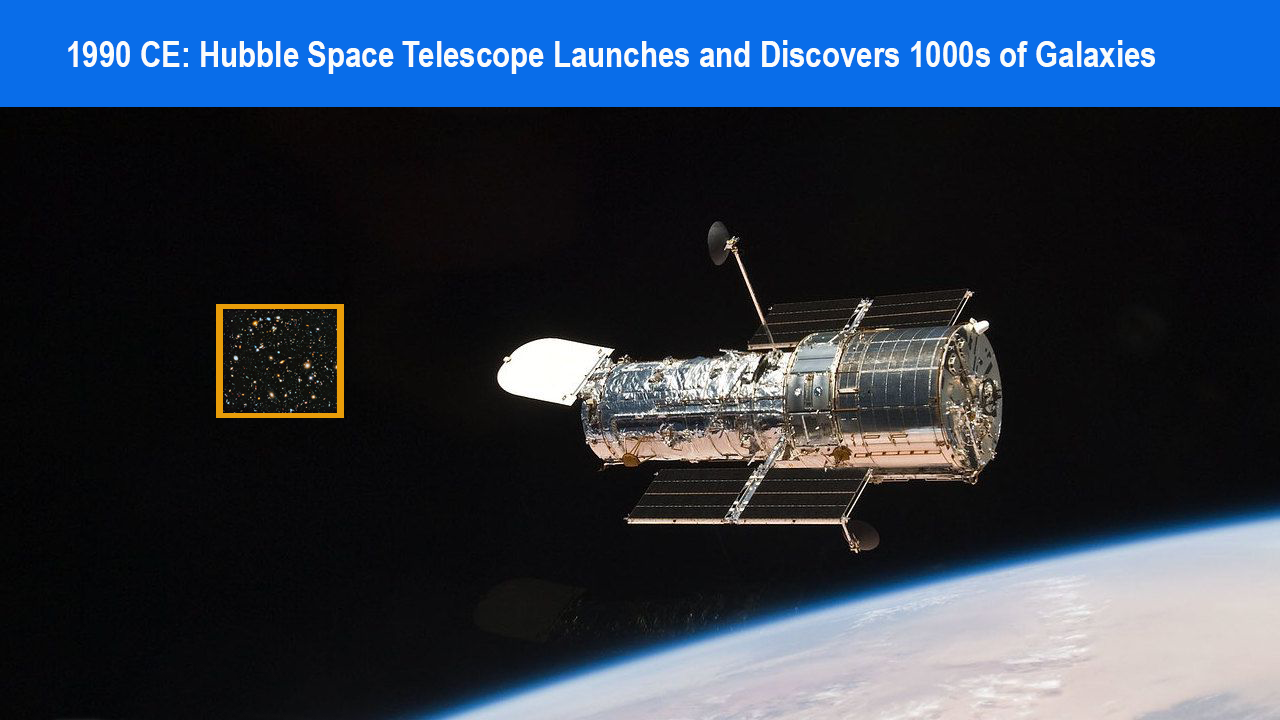 In 1990, The Hubble telescope is named after astronomer Edwin Hubble would be launched into orbit. The eye in the sky would provide spectacular images of space phenomena including galaxies and nebulae.
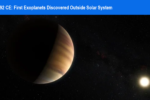
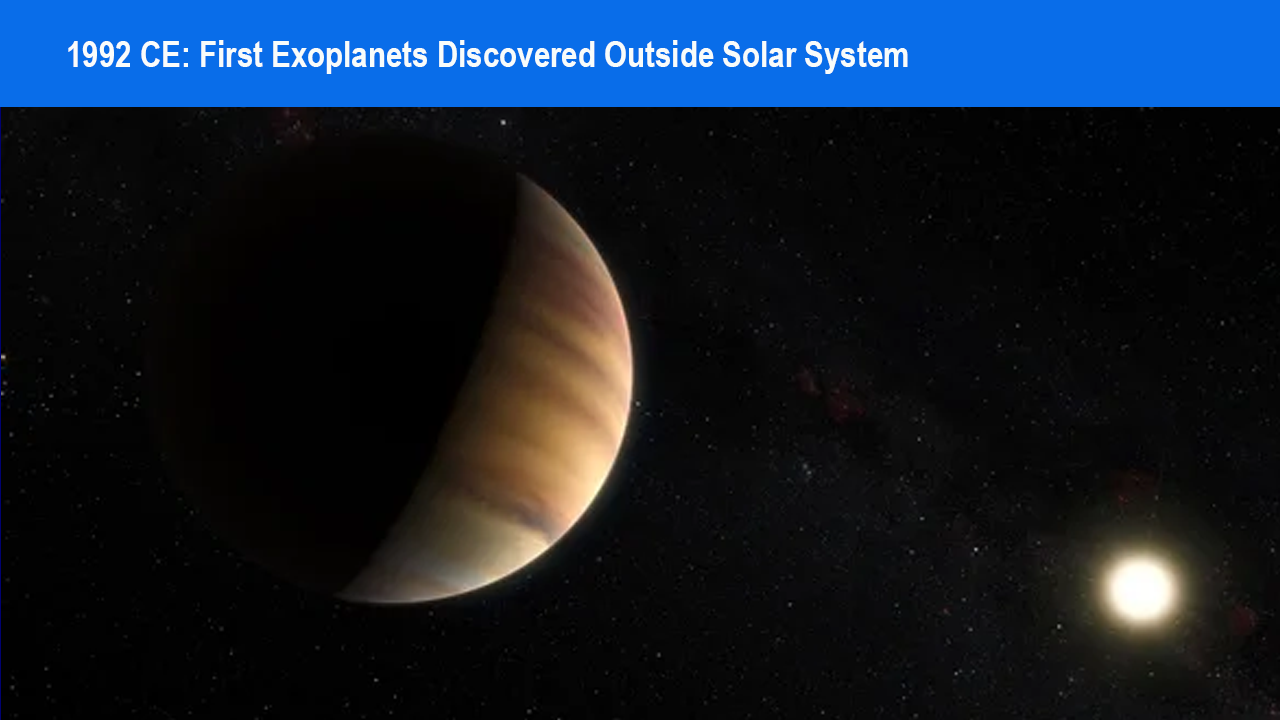 In 1992, the first exoplanet is discovered outside our solar system furthering the notion that we might not be alone in the universe. A different planet, initially detected in 1988, was confirmed in 2003. As of 2022, there are 4,905 confirmed exoplanets in 3,629 planetary systems, with 808 systems having more than one planet.
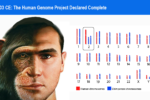
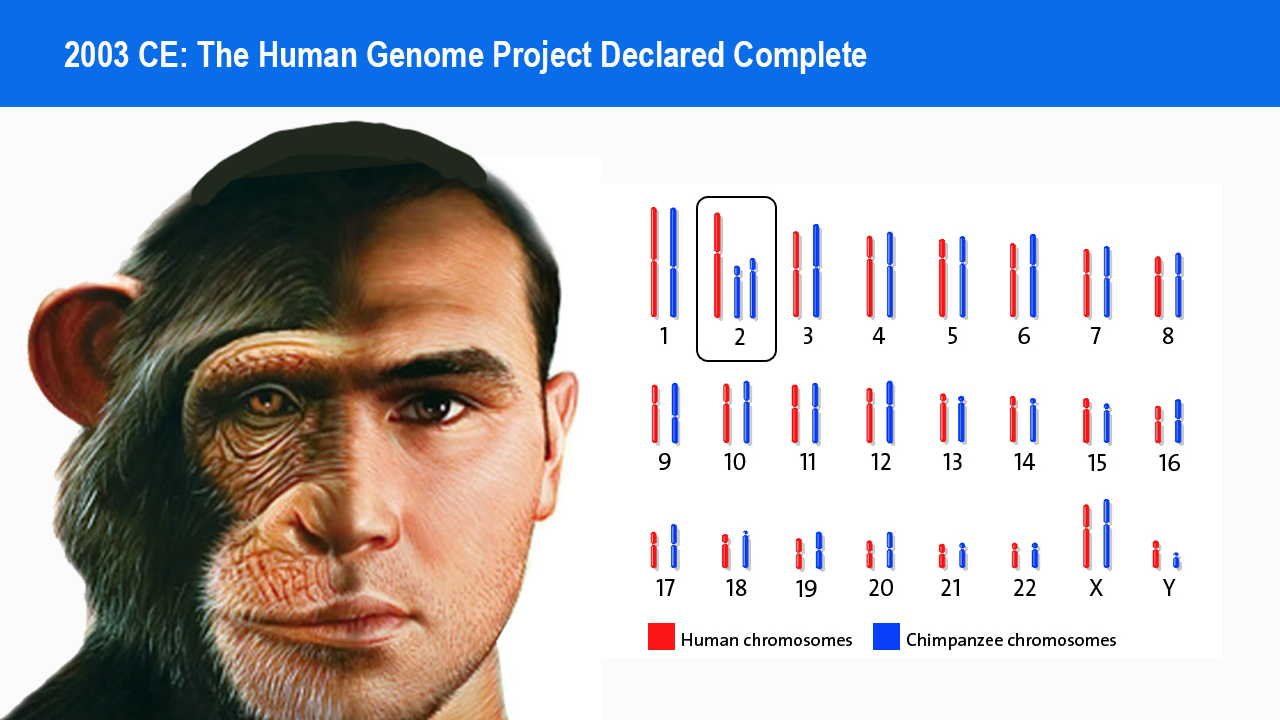 In 2003 CE, the human Genome project was declared complete. The goal was to determine the base pairs that make up human DNA and sequence all of the genes of the human genome from both a physical and a functional standpoint. A later sequencing would compare human and chimpanzee DNA and use endogenous retrovirus markers to estimate a split in lineage about 6 million years ago.
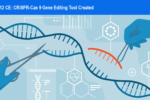
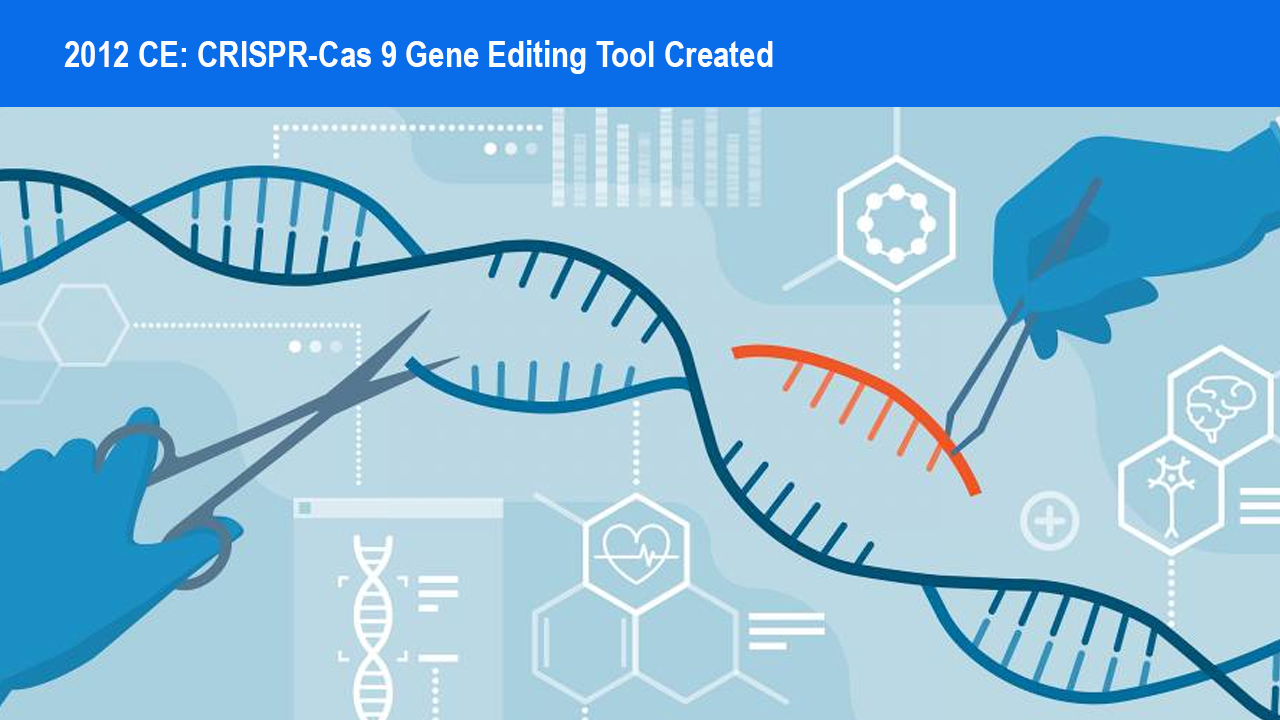 In 2012 CRISPR-CAS 9, a gene editing tool, is created This editing process has a wide variety of applications including basic biological research, development of biotechnological products, and treatment of diseases. The development of the CRISPR-Cas9 genome editing technique was recognized by the Nobel Prize in Chemistry in 2020 which was awarded to Emmanuelle Charpentier and Jennifer Doudna